CRYING FOR IMAM HUSAYN (AS):A PROVEN PATH TO PARADISE

Jun 26, 2026 | CRYING FOR IMAM HUSAYN (AS):A PROVEN PATH TO PARADISE

Introduction

When discussing the virtues of the Ahl al-Bayt (peace be upon them) with the Nawāṣib, one quickly notices a familiar pattern. Their approach resembles that of a lawyer instructed to oppose a planning application at all costs. He first argues that the application is legally defective. If that argument fails, he challenges the evidence. If the evidence proves sound, he disputes the procedure. If that too fails, he searches for another technicality in the hope of delaying or preventing implementation. At no stage is he asking, “What is true?” Rather, his sole objective is to ensure that the application never succeeds.

Likewise, when confronted with narrations concerning the virtues of the Ahl al-Bayt (peace be upon them), the Nawāṣib begin with a predetermined conclusion: the report must not be accepted. If they are unaware of its existence in their own books, they dismiss it as a “Shīʿī fabrication.” Once it is demonstrated that the same narration exists in recognised Sunni sources, they immediately change tactics and begin searching for any conceivable means of weakening, denying, or explaining it away.

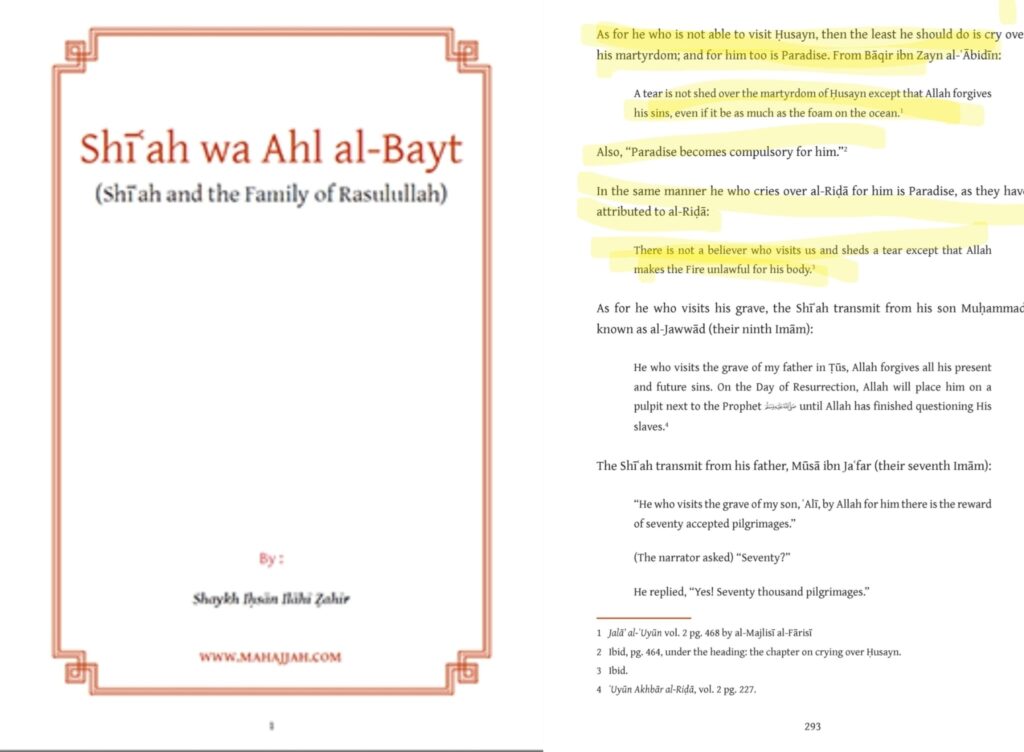
A clear example of this methodology can be seen in the writings of one of the leading voices of modern Nāsibism, Shaykh Iḥsān Ilāhī Ẓahīr. In Shīʿah wa Ahl al-Bayt (p. 293), he writes:

“As for the one who is unable to visit al-Ḥusayn, then the least he should do is weep over his martyrdom; and for him too is Paradise… A tear is not shed over the martyrdom of al-Ḥusayn except that Allah forgives his sins, even if they be as much as the foam of the ocean… Paradise becomes obligatory for him… Likewise, whoever weeps over al-Riḍā, for him is Paradise.”
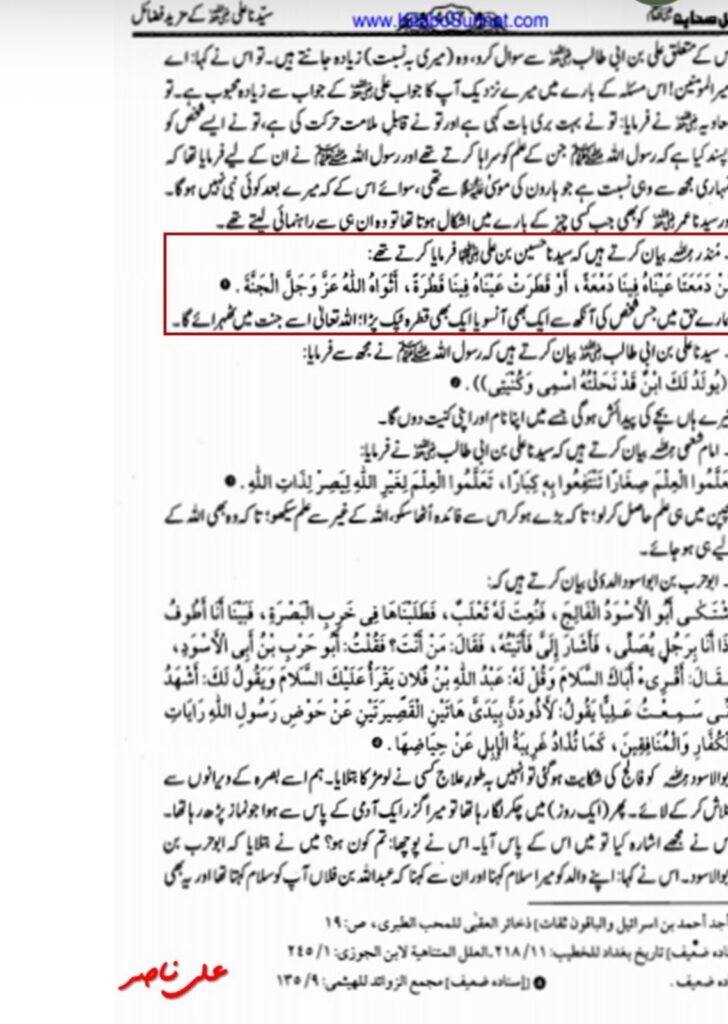
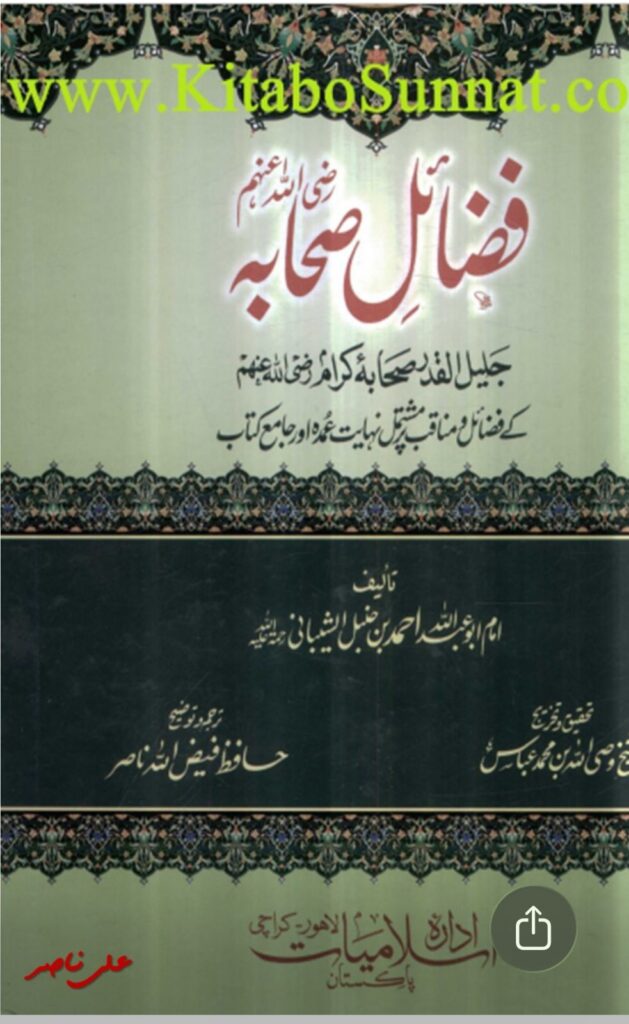
Having cited these narrations, he leaves the reader with the impression that such beliefs are uniquely Shīʿī and therefore objectionable. What he fails to inform his readership is that the very same concept is explicitly found in Sunni hadith literature. Imam Aḥmad ibn Ḥanbal narrates in Faḍāʾil al-Ṣaḥābah that the Master of Martyrs, Imam al-Ḥusayn (peace be upon him), said:

مَنْ دَمَعَتْ عَيْنَاهُ فِينَا دَمْعَةً، أَوْ قَطَرَتْ عَيْنَاهُ فِينَا قَطْرَةً، أَثْوَاهُ اللَّهُ عَزَّ وَجَلَّ الْجَنَّةَ

“Whoever’s eyes shed a tear for us, or whose eyes let fall even a single drop for us, Allah, Mighty and Majestic, will grant him Paradise.”

(Faḍāʾil al-Ṣaḥābah, no. 1154)

The existence of this narration in Sunni sources places the Nawāṣib in an uncomfortable position. They can no longer dismiss the report as a purely Shīʿī invention. Instead, they are compelled to embark upon the familiar exercise of manufacturing objections in an attempt to deny its implications.

The religion of the Nawāṣib is one of denial. They reject every report that manifests the virtues of the Ahl al-Bayt (peace be upon them), regardless of its provenance or authenticity. What else can be expected from a methodology inherited from Banū Umayyah?

The narration concerning weeping for Imam al-Ḥusayn (peace be upon him) is particularly troublesome for them because many among them have already declared mourning and weeping to be a bidʿah (innovation). How, then, can they reconcile such pronouncements with a narration promising Paradise for shedding even a single tear for the family of the Messenger of Allah (peace and blessings be upon him and his family)? And once the reward for such grief is established, another question naturally arises: who were the individuals whose crimes were so grave that mourning their victims became an act rewarded with Paradise?

In response to one such objector, Maulana Sayyid Abu Hasham Najafi authored a detailed written refutation. Since these same tired objections continue to be repeated by the followers of Banū Umayyah, he deemed it necessary to expose, in writing, the inconsistencies, deceptions, and selective methodology that characterise their treatment of narrations concerning the virtues of the Ahl al-Bayt (peace be upon them). May Allah increase him in success and accept his efforts.

Shiapen Team

A Sahih Chain Hadith in Fada’il al-Sahaba by Ahmad ibn Hanbal

Ahmad ibn Hanbal narrates with a sahih chain from Imam Husayn (peace be upon him):

حدثنا أحمد بن إسرائيل قال: رأيت في كتاب أحمد بن محمد بن حنبل رحمه الله بخط يده: نا أسود بن عامر أبو عبد الرحمن قثنا الربيع بن منذر، عن أبيه قال: كان حسين بن علي يقول: من دمعتا عيناه فينا دمعة، أو قطرَت عيناه فينا قطرة، أثواه الله عز وجل الجنة.

Munzir reports that Imam Husayn (peace be upon him) used to say:
“Whoever’s eyes shed a tear for us, or whose eyes dropped a single tear for us, Allah, Mighty and Glorious, will grant him Paradise.”

[Fada’il al-Sahaba, by Ahmad ibn Muhammad ibn Hanbal al-Shaybani (d. 241 AH),
ed. Dr. Wasiullah Muhammad Abbas, Mu’assasat al-Risalah – Beirut, 1st edition, 1403 AH – 1983 CE, vol. 2, p. 575, Hadith no. 1154]

https://shamela.ws/book/13136/1132
Abu Bakr al-Qati‘i said: Ahmad ibn Isra’il narrated to us that he said: “I saw in the book of Ahmad ibn Hanbal, written in his own handwriting, that al-Aswad ibn ‘Āmir narrated to us from al-Rabi‘ ibn Mundhir, from his father, who said: Husayn ibn ‘Ali (may Allah be pleased with both of them) used to say:

“مَنْ دَمَعَتْ عَيْنَاهُ فِينَا دَمْعَةً، أَوْ قَطَرَتْ عَيْنَاهُ فِينَا قَطْرَةً، أَثْوَاهُ اللَّهُ عَزَّ وَجَلَّ الْجَنَّةَ.”

‘Whoever’s eyes well up with tears for us, or whoever sheds a single tear for us, Allah the Almighty will grant him Paradise.’”

This narration is nothing short of a deadly poison for the nāsibīs, and thus, when confronted with it, they are often found mourning their own state. The Arab nāsibīs go to every length of falsehood and deception to reject this narration. And the local nāsibīs here slavishly consume the regurgitated fabrications of those Arab nāsibīs. One such nāsibī, having lapped up their rhetoric, deludes himself into thinking he has conquered Khaybar. In this article, we will respond to the objections raised by this nāsibī and his ilk.

Objection of the Nāsibī to the Hadith

The nāsibī writes:

“Will Paradise really be granted merely for crying over the grief and tribulation of Sayyidunā al-Ḥusayn (may Allah be pleased with him)? Therefore, the Shīʿah’s reasoning based upon the following narration is invalid.”

He then cites the following report:

1154 – Aḥmad ibn Isrāʾīl said:

“I saw in the book of Aḥmad ibn Muḥammad ibn Ḥanbal, in his own handwriting: al-Aswad ibn ʿĀmir narrated to us, who said: al-Rabīʿ ibn Mundhir narrated to us from his father, who said: Ḥusayn ibn ʿAlī used to say:

مَنْ دَمَعَتْ عَيْنَاهُ فِينَا دَمْعَةً، أَوْ قَطَرَتْ عَيْنَاهُ فِينَا قَطْرَةً، أَثْوَاهُ اللَّهُ عَزَّ وَجَلَّ الْجَنَّةَ

“Whoever’s eyes shed tears for us, or whose eyes drop even a single tear for us, Allah, Mighty and Majestic, shall grant him Paradise.”

(Faḍāʾil al-Ṣaḥābah, vol. 2, p. 675)

The nāsibī then objects:

He therefore concludes:

“This proves that the narration is munqaṭiʿ (disconnected). Even if reliable narrators are present in the chain, a narration cannot be deemed authentic without proof of auditory transmission. Consequently, this narration cannot be used as evidence.”

Our Response

The entire objection rests upon a single assumption: namely, that because Aḥmad ibn Isrāʾīl did not personally meet Imam Aḥmad ibn Ḥanbal, his testimony—”I saw it in his handwriting”—must necessarily be rejected. This argument is entirely untenable.

Firstly

Aḥmad ibn Isrāʾīl was a student of ʿAbd Allāh ibn Aḥmad ibn Ḥanbal, the son of Imam Aḥmad himself. He was a Hanbali jurist and a reliable (thiqah) hadith scholar, whose biographical credentials and reliability shall be discussed shortly.

At this point, the nāsibī is left with only two possibilities:

1.    He must declare Aḥmad ibn Isrāʾīl to be a liar and fabricator who falsely claimed to have seen this statement in Imam Aḥmad’s own handwriting; or

2.    He must accept the testimony of a trustworthy Hanbali scholar who was intimately connected to Imam Aḥmad’s scholarly circle and whose word carries far greater weight than the conjecture of a latter-day objector.

There is no third option.

Secondly

The objection suffers from a glaring inconsistency.

Within Sunni scholarship, works such as Siyar Aʿlām al-Nubalāʾ, Mīzān al-Iʿtidāl, Tahdhīb al-Tahdhīb, Taqrīb al-Tahdhīb, and Lisān al-Mīzān are universally regarded as authoritative references, despite their authors having lived centuries after many of the individuals whose statements and biographies they record. These works frequently transmit information without furnishing complete isnāds for every report, yet they are accepted and relied upon by Sunni scholars.

If the mere absence of direct auditory transmission or personal contemporaneity were sufficient grounds for rejecting a report, then the very foundations of Sunni biographical and rijāl literature would become unusable. Yet no Sunni scholar adopts such a methodology.

The criterion is therefore not being applied consistently. Rather, it is being selectively invoked because the narration in question establishes a virtue of the Ahl al-Bayt (peace be upon them).

Thirdly

The claim that Aḥmad ibn Isrāʾīl failed to identify the book from which he transmitted is likewise unfounded.

The work to which Aḥmad ibn Isrāʾīl referred was Imam Aḥmad’s compilation concerning the virtues of Imam ʿAlī (peace be upon him), a work from which later Sunni authorities also transmitted. Among those who cited from it was the Mufti of Makkah and eminent hadith scholar, al-Ḥāfiẓ Muḥibb al-Dīn al-Ṭabarī.

Before quoting his transmission, it is worth noting al-Dhahabī’s appraisal of him:

“The Imam, the hadith scholar, the Mufti, the jurist of the Haram—Muḥibb al-Dīn Abū al-ʿAbbās Aḥmad ibn ʿAbd Allāh ibn Muḥammad ibn Abī Bakr al-Ṭabarī, then al-Makkī al-Shāfiʿī, author of al-Aḥkām al-Kubrā. He heard hadith from numerous scholars, became a jurist, teacher, mufti, and author. He was the Shaykh of the Shāfiʿīs and the hadith scholar of the Ḥijāz.”

(Tadhkirat al-Ḥuffāẓ, vol. 4, p. 1474).

Accordingly, the nāsibī’s objection collapses on every front. It is founded neither upon a recognised principle of hadith criticism nor upon a methodology consistently applied within Sunni scholarship. Rather, it is an ad hoc objection advanced solely because the report under discussion extols the virtues of the Household of the Messenger of Allah (peace and blessings be upon him and his family).

Muḥibb al-Dīn al-Ṭabarī’s Citation of the Narration

Al-Ḥāfiẓ Muḥibb al-Dīn al-Ṭabarī writes:

عن الربيع بن منذر عن أبيه قال كان حسين بن علي رضي الله عنهما يقول: من دمعت عيناه فينا دمعة أو قطرت عيناه فينا قطرة آتاه الله عز وجل الجنة

“Al-Rabīʿ ibn Mundhir narrated from his father, who said: Al-Ḥusayn ibn ʿAlī (may Allah be pleased with them both) used to say:

‘Whoever’s eyes shed a tear for us, or if his eyes shed even a single drop for us, Allah, Mighty and Majestic, will grant him Paradise.'”

Aḥmad included this in al-Manāqib.

Source: Al-Ḥāfiẓ Muḥibb al-Dīn al-Ṭabarī, Dhakhāʾir al-ʿUqbā fī Manāqib Dhawī al-Qurbā, p. 19.

Online edition: http://shiaonlinelibrary.com

Likewise, al-Sakhāwī also attributed the narration to Imam Aḥmad’s al-Manāqib. He writes:

وعن الحسين بن علي قال: من دمعت عيناه فينا، أو قطرت عيناه فينا قطرة، آتاه الله عز وجل الجنة. أخرجه أحمد في المناقب

“Al-Ḥusayn ibn ʿAlī said:

‘Whoever’s eyes shed tears for us, or whose eyes let fall even a single drop for us, Allah, Mighty and Majestic, will grant him Paradise.'”

Aḥmad recorded it in al-Manāqib.

Source: Al-Sakhāwī, Istijlāb Irtiqāʾ al-Ghuraf bi-Ḥubb Aqrabāʾ al-Rasūl Dhawī al-Sharaf, vol. 1, p. 432.

Thus, not one, but multiple Sunni authorities explicitly attribute this narration to Imam Aḥmad’s al-Manāqib. Consequently, the claim that Aḥmad ibn Isrāʾīl merely referred to an unidentified or unknown book is demonstrably false. Rather, later Sunni scholars were aware of the work, cited from it, and explicitly identified it as Imam Aḥmad’s al-Manāqib.

The nāsibī’s objection therefore collapses entirely, for it rests upon conjecture and assumptions that are contradicted by the testimony of his own authorities.

أخرج أحمد في المناقب عن الربيع بن منذر عن أبيه قال: كان حسن بن علي يقول: من دمعت عيناه فينا دمعة أو قطرت عيناه فينا قطرة آتاه الله عز وجل الجنة.

Aḥmad recorded in al-Manāqib from al-Rabīʿ ibn Mundhir, from his father, who said:

“Al-Ḥasan ibn ʿAlī used to say: ‘Whoever’s eyes shed a tear for us, or whose eyes let fall even a single drop for us, Allah, Mighty and Majestic, will grant him Paradise.’”

(Mirqāt al-Mafātīḥ Sharḥ Mishkāt al-Maṣābīḥ, vol. 11, p. 315)

Mulla ʿAlī al-Qārī likewise cited this narration from Imam Aḥmad’s al-Manāqib.

The Nāsibī’s Further Objection

After the testimony of multiple Sunni authorities, the nāsibī nevertheless continues:

“The most important point is that ʿAbd Allāh ibn Aḥmad ibn Ḥanbal, the son of Imam Aḥmad, made no mention of this narration, while Aḥmad ibn Isrāʾīl claims to have seen it written in Aḥmad’s own handwriting — and he was born twelve years after Imam Aḥmad’s death. Astonishing!”

Our Response

This objection is built entirely upon assumptions for which no evidence is provided.

What proof is there that every narration of Imam Aḥmad was heard directly by his son, ʿAbd Allāh?

What proof is there that every narration heard by ʿAbd Allāh has survived and is preserved today?

What proof is there that ʿAbd Allāh was even aware of this particular narration?

What proof is there that Abū Bakr al-Qaṭīʿī only ever transmitted Imam Aḥmad’s narrations through ʿAbd Allāh ibn Aḥmad?

The answer to each of these questions is the same: there is no proof. Thus, the nāsibī’s supposedly strongest argument collapses, for it is nothing more than an argument from silence.

In reality, Imam Aḥmad possessed numerous works, many of which were acknowledged by Sunni scholars themselves, cited by later authorities, or referred to in summary, despite no longer surviving in full today. Examples include references from al-Ṭabarī, al-Sakhāwī, and Mulla ʿAlī al-Qārī.

Examples of Imam Aḥmad ibn Ḥanbal’s Works

1. Tafsīr al-Qurʾān

This was one of Imam Aḥmad’s largest works and is reported to have contained 120,000 narrations.

Ibn al-Jawzī writes:

“Imam Aḥmad, may Allah be pleased with him, used to dislike writing books and forbade that his speech and legal rulings be written. Had he permitted it, he would have had many compilations and authored books. What has come down to us are only what others transmitted from him. He compiled the Musnad, which contains thirty thousand hadiths, and he used to say to his son ʿAbd Allāh: ‘Preserve this Musnad, for it will be a leader for the people.’ And [he also compiled] the Tafsīr, which contains one hundred and twenty thousand hadiths.”

Source: Manāqib al-Imām Aḥmad, Jamāl al-Dīn Abū al-Faraj ʿAbd al-Raḥmān ibn ʿAlī ibn Muḥammad al-Jawzī (d. 597 AH), ed. Dr. ʿAbd Allāh ibn ʿAbd al-Muḥsin al-Turkī, Dār Hijr, 2nd ed., 1409 AH, p. 261.

https://al-maktaba.org/book/33490/261

Al-Zajjāj writes:

“Most of what I have narrated in this book of Tafsīr is from the Tafsīr of Aḥmad ibn Ḥanbal.”

Source: Maʿānī al-Qurʾān wa-Iʿrābuhu, Abū Isḥāq al-Zajjāj (d. 311 AH), ed. ʿAbd al-Jalīl ʿAbduh Shalabī, ʿĀlam al-Kutub – Beirut, 1st ed., 1408 AH / 1988 CE, vol. 4, p. 166.

https://shamela.ws/book/922/1524

Ibn Taymiyyah also acknowledged the existence of this Tafsīr:

وَأَمَّا النَّوْعُ الثَّانِي مِنْ مُسْتَنَدِي الِاخْتِلَافِ، وَهُوَ مَا يُعْلَمُ بِالِاسْتِدْلَالِ لَا بِالنَّقْلِ، فَهَذَا أَكْثَرُ مَا فِيهِ الْخَطَأُ مِنْ جِهَتَيْنِ – حَدَثَتَا بَعْدَ تَفْسِيرِ الصَّحَابَةِ وَالتَّابِعِينَ وَتَابِعِيهِمْ بِإِحْسَانٍ؛ فَإِنَّ التَّفَاسِيرَ الَّتِي يُذْكَرُ فِيهَا كَلَامُ هَؤُلَاءِ صَرْفًا لَا يَكَادُ يُوجَدُ فِيهَا شَيْءٌ مِنْ هَاتَيْنِ الْجِهَتَيْنِ، مِثْلُ تَفْسِيرِ عَبْدِ الرَّزَّاقِ، وَوَكِيعٍ، وَعَبْدِ بْنِ حُمَيْدٍ، وَعَبْدِ الرَّحْمَنِ بْنِ إِبْرَاهِيمَ دُحَيْمٍ، وَمِثْلُ تَفْسِيرِ الْإِمَامِ أَحْمَدَ

“As for the second type of basis for disagreement, which is that which is known through reasoning and not by transmission this contains the greatest errors from two perspectives, and both emerged after the Tafsīr of the Companions, the Followers, and their followers with excellence. For the Tafāsīr in which only the words of those early generations are mentioned are virtually free of these two types of errors — such as the Tafsīr of ʿAbd al-Razzāq, Wakīʿ, ʿAbd ibn Ḥumayd, ʿAbd al-Raḥmān ibn Ibrāhīm Duḥaym, and likewise the Tafsīr of Imam Aḥmad.”

Source: Majmūʿ al-Fatāwā, Ibn Taymiyyah, vol. 13, p. 355, King Fahd Complex, 1416 AH / 1995 CE.

https://islamweb.net/ar/library/index.php?

page=bookcontents&ID=1404&bk_no=22&flag=1

Al-Dhahabī writes:

ﻭﻗﺎﻝ ﺃﺑﻮ ﺍﻟﺤﺴﻴﻦ ﺃﺣﻤﺪ ﺑﻦ ﺟﻌﻔﺮ ﺑﻦ ﺍﻟﻤﻨﺎﺩﻱ : ﻟﻢ ﻳﻜﻦ ﻓﻲ ﺍﻟﺪﻧﻴﺎ ﺃﺣﺪ ﺃﺭﻭﻯ ﻋﻦ ﺃﺑﻴﻪ ﻣﻦ ﻋﺒﺪﺍﻟﻠﻪ ﺑﻦ ﺃﺣﻤﺪ، ﻻﻧﻪ ﺳﻤﻊ ﻣﻨﻪ ” ﺍﻟﻤﺴﻨﺪ ” ، ﻭﻫﻮ ﺛﻼﺛﻮﻥ ﺃﻟﻔﺎ، ﻭ ” ﺍﻟﺘﻔﺴﻴﺮ ” ، ﻭﻫﻮ ﻣﺌﺔ ﺃﻟﻒ ﻭﻋﺸﺮﻭﻥ ﺃﻟﻔﺎ، ﺳﻤﻊ ﻣﻨﻪ ﺛﻤﺎﻧﻴﻦ ﺃﻟﻔﺎ، ﻭﺍﻟﺒﺎﻗﻲ ﻭﺟﺎﺩﺓ

“Abū al-Ḥusayn Aḥmad ibn Jaʿfar ibn al-Munādī said: There was no one in the world who narrated more from his father than ʿAbd Allāh ibn Aḥmad, for he heard from him the Musnad, which comprises thirty thousand narrations, and the Tafsīr, which contains one hundred and twenty thousand narrations. He heard eighty thousand of them directly, while the remainder he obtained from written notes.”

Source: Siyar Aʿlām al-Nubalāʾ, al-Dhahabī, 9th ed., 1413 AH / 1993 CE, Muʾassasat al-Risālah, vol. 13, p. 521.

http://shiaonlinelibrary.com/

Al-Dhahabī then expressed scepticism regarding the survival of the Tafsīr, saying:

ﻗﻠﺖ : ﻣﺎ ﺯﻟﻨﺎ ﻧﺴﻤﻊ ﺑﻬﺬﺍ ” ﺍﻟﺘﻔﺴﻴﺮ ” ﺍﻟﻜﺒﻴﺮ ﻻﺣﻤﺪ ﻋﻠﻰ ﺃﻟﺴﻨﺔ ﺍﻟﻄﻠﺒﺔ ، ﻭﻋﻤﺪﺗﻬﻢ ﺣﻜﺎﻳﺔ ﺍﺑﻦ ﺍﻟﻤﻨﺎﺩﻱ ﻫﺬﻩ ، ﻭﻫﻮ ﻛﺒﻴﺮ ﻗﺪ ﺳﻤﻊ ﻣﻦ ﺟﺪﻩ ، ﻭﻋﺒﺎﺱ ﺍﻟﺪﻭﺭﻱ ، ﻭﻣﻦ ﻋﺒﺪﺍﻟﻠﻪ ﺑﻦ ﺃﺣﻤﺪ ، ﻟﻜﻦ ﻣﺎ ﺭﺃﻳﻨﺎ ﺃﺣﺪﺍً ﺃﺧﺒﺮﻧﺎ ﻋﻦ ﻭﺟﻮﺩ ﻫﺬﺍ ” ﺍﻟﺘﻔﺴﻴﺮ ” ، ﻭﻻ ﺑﻌﻀﻪ ، ﻭﻻ ﻛﺮﺍﺳﺔ ﻣﻨﻪ ، ﻭﻟﻮ ﻛﺎﻥ ﻟﻪ ﻭﺟﻮﺩ ، ﺃﻭ ﻟﺸَﻲْءٍ ﻣﻨﻪ ﻟﻨﺴﺨُﻮﻩ ، ﻭﻻﻋﺘَﻨَﻰ ﺑﺬﻟﻚ ﻃﻠَﺒَﺔُ ﺍﻟﻌِﻠْﻢِ، ﻭﻟﺤﺼَّﻠُﻮﺍ ﺫَﻟِﻚ، ﻭﻟَﻨُﻘِﻞَ ﺇﻟَﻴْﻨَﺎ

“I say: We have continued to hear about this great Tafsīr of Aḥmad upon the tongues of students, and their only source is this narration of Ibn al-Munādī. He was indeed a senior figure who heard from his grandfather, from ʿAbbās al-Dūrī, and from ʿAbd Allāh ibn Aḥmad. Yet we have not seen anyone inform us of the actual existence of this Tafsīr — not even part of it, not even a single notebook. Had it existed, or had anything from it survived, it would have been copied, students of knowledge would have devoted attention to it, acquired it, and it would have reached us.”

Source: Siyar Aʿlām al-Nubalāʾ, vol. 13, p. 522.

http://shiaonlinelibrary.com/

We say: al-Dhahabī’s reasoning does not prove that the Tafsīr never existed. At most, it proves that the work had not reached him. The absence of a book from the possession of a later scholar is not evidence that it never existed, especially when earlier and other recognised authorities affirmed its existence. Therefore, al-Dhahabī’s statement cannot overturn the explicit testimonies establishing that Imam Aḥmad had such a work.

2. al-Muqaddam wa al-Muʾakhkhar in the Qurʾān

This work is mentioned by al-Khaṭīb al-Baghdādī in Tārīkh Baghdād, vol. 9, p. 375.

3. Kitāb al-Zuhd

This was a large work. According to Ibn Ḥajar, it was approximately one third the size of the Musnad and contained many narrations and reports not found in the Musnad:

(كتاب الزهد) لأحمد فالتقط منه ما فيه من الرجال مما ليس في المسند فإنه كتاب كبير يكون في قدر ثلث المسند مع كبر المسند وفيه من الأحاديث والآثار مما ليس في المسند شئ كثير

Source: Taʿjīl al-Manfaʿa bi-Zawāʾid Rijāl al-Aʾimma al-Arbaʿa, Ibn Ḥajar al-ʿAsqalānī, Dār al-Kitāb al-ʿArabī, Beirut, p. 8.

Link to text on Shia Online Library.

4. Faḍāʾil Ahl al-Bayt ʿalayhim al-salām

This book was dedicated to the virtues of the Ahl al-Bayt (peace be upon them). Al-Ḥākim mentioned it and transmitted a report from it in al-Mustadrak:

4746 – وَأَخْبَرْنَاهُ أَبُو بَكْرٍ الْقَطِيعِيُّ، فِي فَضَائِلِ أَهْلِ الْبَيْتِ تَصْنِيفُ أَبِي عَبْدِ اللَّهِ أَحْمَدَ بْنِ حَنْبَلٍ، ثنا عَبْدُ اللَّهِ بْنُ أَحْمَدَ بْنِ حَنْبَلٍ، حَدَّثَنِي أَبِي، ثنا عَبْدُ الرَّزَّاقِ، أَنْبَأَ مَعْمَرٌ، عَنِ الزُّهْرِيِّ، عَنْ أَنَسِ بْنِ مَالِكٍ أَنَّ النَّبِيَّ صَلَّى اللهُ عَلَيْهِ وَسَلَّمَ، قَالَ:
حَسْبُكَ مِنْ نِسَاءِ الْعَالَمِينَ مَرْيَمُ بِنْتُ عِمْرَانَ، وَآسِيَةُ امْرَأَةُ فِرْعَوْنَ، وَخَدِيجَةُ بِنْتُ خُوَيْلِدٍ، وَفَاطِمَةُ بِنْتُ مُحَمَّدٍ
هَذَا حَدِيثٌ صَحِيحٌ عَلَى شَرْطِ الشَّيْخَيْنِ، وَلَمْ يُخَرِّجَاهُ بِهَذَا اللَّفْظِ، فَإِنَّ قَوْلَهُ صَلَّى اللهُ عَلَيْهِ وَسَلَّمَ: حَسْبُكَ مِنْ نِسَاءِ الْعَالَمِينَ يُسَوِّي بَيْنَ نِسَاءِ الدُّنْيَا.

Source: al-Mustadrak ʿalā al-Ṣaḥīḥayn, Muḥammad ibn ʿAbd Allāh al-Ḥākim al-Naysābūrī, vol. 3, p. 172. Al-Dhahabī commented: “On the conditions of al-Bukhārī and Muslim.”

Link to text on eFatwa Library.

5. Manāqib ʿAlī ʿalayhi al-salām

From this work, even major Sunni scholars transmitted narrations. Muḥammad ibn Yūsuf al-Kanjī al-Shāfiʿī cites traditions from Aḥmad’s Manāqib in his famous work, writing:

وأخرجه الإمام أحمد في مناقب علي عليه السلام

Source: Kifāyat al-Ṭālib fī Manāqib ʿAlī ibn Abī Ṭālib, Muḥammad ibn Yūsuf al-Kanjī al-Shāfiʿī (d. 658 AH), ed. Shaykh Muḥammad Hādī al-Amīnī, 3rd ed., Dār Iḥyāʾ Turāth Ahl al-Bayt, Tehran, 1404 AH / 1984 CE, p. 372.

Link to text on Ghadir Free.

Moreover, Aḥmad ibn Ḥanbal is explicitly reported to have authored a book on the virtues of ʿAlī (peace be upon him). Ibn Ḥajar al-ʿAsqalānī mentions under the biography of Muḥammad ibn Nawāmīr al-Ḥanbalī (d. 745 AH):

وَسَمِعَ بِالشَّامِ عَلَى نَاصِرِ الدِّينِ عُمَرَ بْنِ عَبْدِ الْمُنْعِمِ الْقَوَّاسِ مَنَاقِبَ عَلِيٍّ لِلْإِمَامِ أَحْمَد

“He heard in Shām from Nāṣir al-Dīn ʿUmar ibn ʿAbd al-Munʿim al-Qawwās the Manāqib ʿAlī of Imam Aḥmad.”

Source: al-Durar al-Kāmina fī Aʿyān al-Miʾa al-Thāmina, Ibn Ḥajar al-ʿAsqalānī, vol. 6, p. 31, Dāʾirat al-Maʿārif al-ʿUthmāniyya, Hyderabad, 2nd ed., 1392 AH / 1972 CE.

Link to text on Shamela.

Shams al-Dīn al-Sakhāwī also narrated traditions from the Manāqib of ʿAlī (peace be upon him):

أحمد في المناقب: عن أبي سعيد الخدري قال: نزلت – يعني ‏«إِنَّمَا يُرِيدُ اللَّهُ لِيُذْهِبَ عَنكُمُ ٱلرِّجْسَ أَهْلَ ٱلْبَيْتِ وَيُطَهِّرَكُمْ تَطْهِيرًا» – في خمسة: النبي صلى الله عليه وسلم، وعليٍّ وفاطمةَ والحسن والحسين رضي الله عنهم

“Aḥmad, in al-Manāqib, narrated from Abū Saʿīd al-Khudrī, who said: ‘The verse — “Indeed, Allah desires only to remove impurity from you, O Ahl al-Bayt, and to purify you thoroughly” — was revealed concerning five individuals: the Prophet, ʿAlī, Fāṭimah, al-Ḥasan, and al-Ḥusayn, may Allah be pleased with them.’”

Thus, the claim that the narration comes from an unidentified or unknown book is baseless. The existence of Imam Aḥmad’s works on the virtues of the Ahl al-Bayt and Imam ʿAlī (peace be upon them) is acknowledged across multiple Sunni sources.

Response to the Objection Concerning Aḥmad ibn Isrāʾīl

The editor of Faḍāʾil al-Ṣaḥābah, Waṣī Allāh ibn ʿAbbās, after quoting the narration, remarked:

أحمد بن إسرائيل شيخ القطیعی لم أجده والباقون ثقات

“Aḥmad ibn Isrāʾīl, the teacher of al-Qaṭīʿī, I could not locate; however, the rest of the narrators are trustworthy.”

Source: Faḍāʾil al-Ṣaḥābah, vol. 2, p. 675.

The objection is therefore that the biographical details of Aḥmad ibn Isrāʾīl, the teacher of al-Qaṭīʿī, were not found by the editor, while the remaining narrators are reliable.

Response

Aḥmad ibn Isrāʾīl is known among the scholars of Ahl al-Sunnah. He was authenticated, praised, and recognised by their own authorities. Waṣī Allāh failed to identify him, but that does not mean he is unknown. We shall now present the statements of Sunni scholars concerning him.

1. Aḥmad ibn Isrāʾīl

His full name is Aḥmad ibn Salmān ibn al-Ḥasan ibn Isrāʾīl ibn Yūnus, known as al-Najjād, and his kunyah is Abū Bakr. When narrating from him, some of his students attributed him to one of his forefathers, as al-Khaṭīb al-Baghdādī explains.

Al-Khaṭīb cites a narration in which the student refers to him as Aḥmad ibn Yūnus al-Qaṭīʿī, then clarifies that the person intended is Aḥmad ibn Isrāʾīl, from whom Abū Bakr al-Qaṭīʿī narrated:

ﺃَﺧْﺒَﺮَﻧَﺎ ﺍﻟْﻘَﺎﺿِﻲ ﺃَﺑُﻮ ﺑَﻜْﺮٍ ﻣُﺤَﻤَّﺪُ ﺑْﻦُ ﻋُﻤَﺮَ ﺍﻟﺪَّﺍﻭُﺩِﻱُّ، ﺃَﺧْﺒَﺮَﻧَﺎ ﻋُﻤَﺮُ ﺑْﻦُ ﺃَﺣْﻤَﺪَ ﺍﻟْﻮَﺍﻋِﻆُ، ﺣَﺪَّﺛَﻨَﺎ ﺃَﺣْﻤَﺪُ ﺑْﻦُ ﻳُﻮﻧُﺲَ ﺍﻟْﻘَﻄِﻴﻌِﻲُّ، ﺣَﺪَّﺛَﻨَﺎ ﻣُﺤَﻤَّﺪُ ﺑْﻦُ ﺷَﺎﺫَﺍﻥَ، ﺣَﺪَّﺛَﻨَﺎ ﻣُﻌَﻠَّﻲ، ﺣَﺪَّﺛَﻨَﺎ ﻋَﺒْﺪُ ﺍﻟﻠَّﻪِ ﺑْﻦُ ﺍﻟْﻤُﺒَﺎﺭَﻙِ، ﻋَﻦْ ﻳُﻮﻧُﺲَ، ﻋَنِ ﺍﻟﺰُّﻫْﺮِﻱِّ، ﻗَﺎﻝَ : ﺣَﺪَّﺛَنِي ﺳَﻬْﻞُ ﺑْﻦُ ﺳَﻌْﺪٍ، ﻋَﻦْ ﺃُﺑَﻲِّ ﺑْﻦِ ﻛَﻌْﺐٍ، ﻗَﺎﻝَ : ﻛَﺎﻧَﺖِ ﺍﻟْﻔُﺘْﻴَﺎ : ﺍﻟْﻤَﺎﺀُ ﻣِﻦَ ﺍﻟْﻤَﺎﺀِ ﺭُﺧْﺼَﺔً ﻓِﻲ ﺃَﻭَّﻝِ ﺍﻹِﺳْﻼﻡِ، ﺛُﻢَّ ﺃُﺣْﻜِﻢَ ﺍﻷَﻣْﺮُ، ﻭَﻧَﻬَﻲ ﻋَﻨْﻪُ

“He is Aḥmad ibn Salmān ibn al-Ḥasan ibn Isrāʾīl ibn Yūnus — thus, ʿUmar traced his lineage back to his great-grandfather. He is Aḥmad ibn Isrāʾīl, from whom Abū Bakr ibn Mālik al-Qaṭīʿī narrates.”

Source: Muwaḍiḥ Awhām al-Jamʿ wa al-Tafrīq, Abū Bakr Aḥmad ibn ʿAlī ibn Thābit al-Khaṭīb al-Baghdādī (d. 463 AH), ed. Dr. ʿAbd al-Muʿṭī Amīn Qalʿajī, Dār al-Maʿrifah – Beirut, 1st ed., 1407 AH, vol. 1, pp. 464–465.
Link to Source.

Al-Samʿānī writes:

“Abū Bakr Aḥmad ibn Salmān ibn al-Ḥasan ibn Isrāʾīl ibn Yūnus, the Ḥanbalī jurist, famously known as al-Najjād  from among the people of Baghdad  had two circles in the Jāmiʿ al-Manṣūr on Fridays: one before the prayer for jurisprudential verdicts according to the school of Aḥmad ibn Ḥanbal, and the other after the prayer for dictating hadith. He was among those whose narrations were extensive and whose aḥādīth became widespread.”

Source: al-Ansāb, Abū Saʿd ʿAbd al-Karīm ibn Muḥammad ibn Manṣūr al-Tamīmī al-Samʿānī (d. 562 AH), notes by ʿAbd Allāh ʿUmar al-Bārūdī, Markaz al-Khadamāt wa al-Abḥāth al-Thaqāfiyyah, vol. 5, p. 457.
Link to Source.

نجاد، ﺃﺑﻮ ﺑﻜﺮ ﺃﺣﻤﺪ ﺑﻦ ﺳﻠﻤﺎﻥ ﺑﻦ ﺍﻟﺤﺴﻦ ﺑﻦ ﺇﺳﺮﺍﺋﻴﻞ ﺑﻦ ﻳﻮﻧﺲ

He was a Hanbali jurist known as al-Najjād and a resident of Baghdad. Every Friday, he held two circles at the Manṣūr Mosque: one before the Friday prayer, in which he issued legal verdicts according to the school of Aḥmad ibn Ḥanbal, and another after the prayer, in which he dictated hadith. He was among those whose narrations were numerous and whose hadiths became widely spread.

Kamāl al-Dīn writes:

ﺃﺣﻤﺪ ﺑﻦ ﺳﻠﻤﺎﻥ ﺑﻦ ﺍﻟﺤﺴﻦ ﺑﻦ ﺇﺳﺮﺍﺋﻴﻞ ﺑﻦ ﻳﻮﻧﺲ ﺍﻟﻤﻌﺮﻭﻑ ﺑﺎﻟﻨﺠﺎﺩ ﺍﻟﻔﻘﻴﻪ ﺍﻟﺤﻨﺒﻠﻲ ﻛﺎﻥ ﻓﻘﻴﻬﺎ ﻣﻔﺘﻴﺎ ﻭﻣﺤﺪﺛﺎ ﻣﺘﻘﻨﺎ ﻭﺍﺳﻊ ﺍﻟﺮﻭﺍﻳﺔ ﻣﺸﻬﻮﺭ ﺍﻟﺪﺭﺍﻳﺔ

“Aḥmad ibn Salmān ibn al-Ḥasan ibn Isrāʾīl ibn Yūnus, known as al-Najjād, the Hanbali jurist, was a jurist, a mufti, and a skilled hadith scholar. He was vast in transmission and well-known for his mastery in hadith comprehension.”

Source: Bughyat al-Ṭalab fī Tārīkh Ḥalab, Kamāl al-Dīn ibn al-ʿAdīm (d. 660 AH), ed. Dr. Suhayl Zakkār, Dār al-Fikr, vol. 2, p. 766.
https://lib.eshia.ir/40296/2/766

Al-Dhahabī writes:

ﺍﻟﻨﺠﺎﺩ ﺍﻹﻣﺎﻡ ﺍﻟﺤﺎﻓﻆ ﺍﻟﻔﻘﻴﻪ ﺷﻴﺦ ﺍﻟﻌﻠﻤﺎﺀ ﺑﺒﻐﺪﺍﺩ ﺃﺑﻮ ﺑﻜﺮ ﺃﺣﻤﺪ ﺑﻦ ﺳﻠﻤﺎﻥ ﺑﻦ ﺍﻟﺤﺴﻦ ﺑﻦ ﺇﺳﺮﺍﺋﻴﻞ ﺍﻟﺒﻐﺪﺍﺩﻱ ﺍﻟﺤﻨﺒﻠﻲ
قﺎﻝ ﺍﻟﺨﻄﻴﺐ: ﻛﺎﻥ ﺻﺪﻭﻗﺎ ﻋﺎﺭﻓﺎ، ﺻﻨﻒ ﻛﺘﺎﺑﺎ ﻛﺒﻴﺮﺍ ﻓﻲ ﺍﻟﺴﻨﻦ، ﻭﻛﺎﻥ ﻟﻪ ﺑﺠﺎﻣﻊ ﺍﻟﻤﻨﺼﻮﺭ ﺣﻠﻘﺔ ﻗﺒﻞ ﺍﻟﺠﻤﻌﺔ ﻟﻠﻔﺘﻮﻱ، ﻭﺣﻠﻘﺔ ﺑﻌﺪﻫﺎ ﻟﻼﻣﻼﺀ. ﺣﺪث ﻋﻨﻪ ﺃﺑﻮ ﺑﻜﺮ ﺍﻟﻘﻄﻴﻌﻲ

“Al-Najjād  the Imam, hadith master, jurist, and teacher of the scholars of Baghdad: Abū Bakr Aḥmad ibn Salmān ibn al-Ḥasan ibn Isrāʾīl al-Baghdādī al-Ḥanbalī.
Al-Khaṭīb said: He was truthful and knowledgeable. He authored a large book on Sunan. At the Manṣūr Mosque, he held a teaching circle before Jumuʿah for fatwa and another afterward for hadith dictation. Abū Bakr al-Qaṭīʿī narrated from him.”

Source: Tadhkirat al-Ḥuffāẓ, al-Dhahabī, vol. 3, p. 868.

http://shiaonlinelibrary.com/الكتب/3281_تذكرة-الحفاظ-الذهبي-ج-٣/الصفحة_91

Abū Yaʿlā al-Ḥanbalī also praised him:

[٥٨١ – أحمد بن سلمان بن الحسن بن إسرائيل بن يونس، أبو بكر النجاد]
ﺍﻟﻌﺎﻟﻢ ﺍﻟﻨﺎﺳﻚ ﺍﻟﻮﺭﻉ، ﻛﺎﻥ ﻟﻪ ﻓﻲ ﺟﺎﻣﻊ ﺍﻟﻤﻨﺼﻮﺭ ﺣﻠﻘﺘﺎﻥ: ﻗﺒﻞ ﺍﻟﺼﻼﺓ ﻟﻠﻔﺘﻮﻯ ﻋﻠﻰ ﻣﺬﻫﺐ ﺇﻣﺎﻧﺎ ﺃﺣﻤﺪ، ﻭﺑﻌﺪ ﺍﻟﺼﻼﺓ ﻟﺈﻣﻼﺀ ﺍﻟﺤﺪﻳﺚ. ﺍﺗﺴﻌﺖ ﺭﻭﺍﻳﺎﺗﻪ، ﻭﺍﻧﺘﺸﺮﺕ ﺃﺣﺎﺩﻳﺜﻪ ﻭﻣﺼﻨﻔﺎﺗﻪ

“Aḥmad ibn Salmān ibn al-Ḥasan ibn Isrāʾīl ibn Yūnus, Abū Bakr al-Najjād  the devout and pious scholar. He had two circles in the Manṣūr Mosque: one before the prayer for giving fatwa according to the madhhab of our Imam Aḥmad, and one after the prayer for dictating hadith. His narrations were extensive, and his hadiths and works became widely circulated.”

Source: Ṭabaqāt al-Ḥanābilah, Abū al-Ḥusayn Ibn Abī Yaʿlā, vol. 2, p. 7, entry no. 581.

https://al-maktaba.org/book/9543/435

2. Al-Aswad ibn ʿĀmir

He is a narrator of the Ṣiḥāḥ Sittah. Al-Dhahabī described him as an imam, hadith memoriser, and truthful:

١٠ – شَاذَانُ أَسْوَدُ بنُ عَامِرٍ الشَّامِيُّ * (ع)
الإِمَامُ، الحَافِظُ، الصَّدُوْقُ، أَبُو عَبْدِ الرَّحْمَنِ أَسْوَدُ بنُ عَامِرٍ، شَاذَانُ الشَّامِيُّ، ثُمَّ البَغْدَادِيُّ

“Shādhān, Aswad ibn ʿĀmir al-Shāmī: the Imam, the hadith memoriser, the truthful, Abū ʿAbd al-Raḥmān Aswad ibn ʿĀmir, known as Shādhān al-Shāmī, then al-Baghdādī.”

Source: Siyar Aʿlām al-Nubalāʾ, al-Dhahabī, vol. 10, p. 112.
https://shamela.ws/book/10906/6361

3. Al-Rabīʿ ibn al-Mundhir

Ibn Ḥibbān included him among the trustworthy:

ﺍﻟﺮﺑﻴﻊ ﺑﻦ ﺍﻟﻤﻨﺬﺭ ﺍﻟﺜﻮﺭﻱ ﻣﻦ ﺃﻫﻞ ﺍﻟﻜﻮﻓﺔ ﻳﺮﻭﻯ ﻋﻦ ﺍﻟﺸﻌﺒﻲ ﻭﺃﺑﻴﻪ، ﺭﻭﻯ ﻋﻨﻪ ﺇﺳﺤﺎﻕ ﺑﻦ ﻣﻨﺼﻮﺭ ﺍﻟﺴﻠﻮﻟﻲ ﻭﺯﻳﺪ ﺑﻦ ﺍﻟﺤﺒﺎﺏ

“Al-Rabīʿ ibn al-Mundhir al-Thawrī, from the people of Kūfa, narrated from al-Shaʿbī and his father. Among those who narrated from him were Isḥāq ibn Manṣūr al-Salūlī and Zayd ibn al-Ḥubāb.”

Source: al-Thiqāt, Ibn Ḥibbān, vol. 6, Dār al-Maʿārif, Hyderabad Deccan, 1st ed., 1393 AH / 1973 CE.
https://shamela.ws/book/5816/2409

Al-ʿAjlī also declared him trustworthy:

٤٦١ – الرّبيع بن مُنْذر كوفى ثِقَة

“Al-Rabīʿ ibn Mundhir, Kufan, is trustworthy.”

Source: Maʿrifat al-Thiqāt min Rijāl Ahl al-ʿIlm wa al-Ḥadīth wa min al-Ḍuʿafāʾ wa Dhikr Madhāhibihim wa Akhbārihim, Abū al-Ḥasan Aḥmad ibn ʿAbd Allāh ibn Ṣāliḥ al-ʿAjlī al-Kūfī (d. 261 AH), ed. ʿAbd al-ʿAlīm ʿAbd al-ʿAẓīm al-Bastawī, Maktabat al-Dār – Madīnat al-Munawwarah, 1st ed., 1405 AH / 1985 CE, vol. 1, p. 356, entry no. 461.
https://shamela.ws/book/5825/178

4. Mundhir ibn Yaʿlā al-Thawrī

Mundhir ibn Yaʿlā al-Thawrī is a narrator of the Ṣiḥāḥ Sittah and was authenticated by several major authorities.

531 –al-Mundhir b. Yaʿlā al-Thawrī, Abū Yaʿlā al-Kūfī, narrated from Muḥammad b. ʿAlī b. Abī Ṭālib, al-Rabīʿ b. Khuthaym, Saʿīd b. Jubayr, ʿĀṣim b. Ḍamrah, al-Ḥasan b. Muḥammad b. ʿAlī b. Abī Ṭālib, and others. Narrated from him: his son al-Rabīʿ, al-Aʿmash, Fiṭr b. Khalīfah, Sālim b. Abī Ḥafṣah, Saʿīd b. Masrūq al-Thawrī, al-Ḥasan b. ʿAmr al-Fuqaymī, Muḥammad b. Sūqah. Ibn Saʿd included him in the third ṭabaqah of Kūfans and said: ‘He was thiqah, with few narrations.’ Ibn Maʿīn, al-ʿAjlī, and Ibn Kharrāsh all said he is thiqah. Ibn Ḥibbān also included him among the trustworthy.

Source: Tahdhīb al-Tahdhīb, Aḥmad ibn ʿAlī ibn Ḥajar al-ʿAsqalānī (d. 852 AH), 1st ed., Maṭbaʿat Dāʾirat al-Maʿārif al-Niẓāmiyyah, Hyderabad al-Dakkan – India, vol. 10, pp. 304–305.
https://shamela.ws/book/3310/4594

Thus, Mundhir al-Thawrī is a narrator of the Ṣiḥāḥ Sittah. Ibn Saʿd placed him in the third ṭabaqah of Kūfans and said: “He is trustworthy, though few in narration.” Ibn Maʿīn, al-ʿAjlī, and Ibn Kharrāsh also declared him trustworthy, and Ibn Ḥibbān included him among the trustworthy.

Objection: Mundhir is not a Tābiʿī, so the Narration is Disconnected

Some nāsibī critics claim that Mundhir ibn Yaʿlā al-Thawrī was not a Tābiʿī and that his narration from Imam al-Ḥusayn (peace be upon him) is therefore disconnected (munqaṭiʿ). They cite Ibn Ḥibbān, who placed him among the followers of the Tābiʿīn:

“Mundhir al-Thawrī Abū Yaʿlā narrates from a group of the Tābiʿīn. The people of Kūfa narrated from him.”

Source: Kitāb al-Thiqāt, Abū Ḥātim Muḥammad ibn Ḥibbān al-Bustī (d. 354 AH), vol. 7, p. 517.
http://shiaonlinelibrary.com/الكتب/3098_الثقات-ابن-حبان-ج-٧/الصفحة_1#top

Response

This objection is weak. Mundhir al-Thawrī is a narrator of the Ṣiḥāḥ Sittah. None of the early scholars classified him as a mudallis, and several authorities mentioned that he narrated directly from Companions. In fact, Ibn Ḥibbān himself appears inconsistent regarding him, sometimes treating him as a Tābiʿī and elsewhere placing him after the Tābiʿīn.

Ibn Ḥibbān writes elsewhere:

٥٥٠٤ – al-Mundhir, Abū Yaʿlā, a shaykh who narrated from Umm Salamah, if he heard from her. Narrated from him: Jāmiʿ b. Abī Rāshid.

Source: al-Thiqāt, Ibn Ḥibbān, vol. 5, p. 421.
https://shamela.ws/book/5816/1938

This shows that Ibn Ḥibbān did not give a settled statement on his generational status. The stronger position is that Mundhir was a Tābiʿī, as indicated by Ibn Saʿd placing him in the third ṭabaqah of Kūfans.

Al-Ṭabarānī also includes Mundhir among those who narrated from Umm al-Muʾminīn Umm Salamah:

“From those of Kūfa who narrated from Umm Salamah: Mundhir al-Thawrī from Umm Salamah.”

Source: al-Muʿjam al-Kabīr, Abū al-Qāsim al-Ṭabarānī (d. 360 AH), ed. Ḥamdī ibn ʿAbd al-Majīd al-Salafī, 2nd ed., vol. 23, p. 327.
https://shamela.ws/book/1733/24256

Al-Ḥākim also reports a narration in which the Companion Ṭāriq ibn Shihāb narrates from Mundhir al-Thawrī:

٨٣٥٠ – … ʿan Ṭāriq b. Shihāb, ʿan Mundhir al-Thawrī, ʿan ʿĀṣim b. Ḍamrah, ʿan ʿAlī رضي الله عنه:

“Five tribulations have been appointed in this Ummah: a general tribulation, then a specific tribulation, then a general one, then a specific one, then comes the blind, deaf, engulfing tribulation in which people become like cattle.”

Al-Ḥākim said:

“This hadith has a ṣaḥīḥ isnād, and neither of them [al-Bukhārī and Muslim] recorded it.”

Source: al-Mustadrak ʿalā al-Ṣaḥīḥayn, al-Ḥākim al-Naysābūrī, ed. Muṣṭafā ʿAbd al-Qādir ʿAṭā, Dār al-Kutub al-ʿIlmiyyah – Beirut, vol. 4, p. 484, hadith 8350.
https://shamela.ws/book/2266/9213

Possible Objection: Al-Ḥākim was Lenient

The nāsibī may claim that al-Ḥākim was lenient in authentication. However, this does not justify dismissing his authentication altogether.

Al-Dhahabī states:

وإن صَحَّحَ له كالدارقطنيِّ والحاكم، فأقلُّ أحوالهِ: حُسْنُ حديثه.

“And if someone like al-Dāraquṭnī or al-Ḥākim declares a hadith authentic, then the minimum condition of such a hadith is that it is ḥasan.”

Source: al-Mawqiẓah fī ʿIlm Muṣṭalaḥ al-Ḥadīth, Shams al-Dīn al-Dhahabī (d. 748 AH), ed. ʿAbd al-Fattāḥ Abū Ghuddah, 2nd ed., 1412 AH, Maktabat al-Maṭbūʿāt al-Islāmiyyah, Ḥalab, p. 78.
Links: Shamela; KetabOnline.
Reference: Sharḥ al-Mawqiẓah fī ʿIlm Muṣṭalaḥ al-Ḥadīth.

Ibn al-Ṣalāḥ likewise did not reject al-Ḥākim’s authentications outright:

فَالْأَوْلَى أَنْ نَتَوَسَّطَ فِي أَمْرِهِ فَنَقُولَ: مَا حَكَمَ بِصِحَّتِهِ، وَلَمْ نَجِدْ ذَلِكَ فِيهِ لِغَيْرِهِ مِنَ الْأَئِمَّةِ، إِنْ لَمْ يَكُنْ مِنْ قَبِيلِ الصَّحِيحِ فَهُوَ مِنْ قَبِيلِ الْحَسَنِ، يُحْتَجُّ بِهِ وَيُعْمَلُ بِهِ، إِلَّا أَنْ تَظْهَرَ فِيهِ عِلَّةٌ تُوجِبُ ضَعْفَهُ.

“It is more appropriate that we take a middle path in his matter and say: when al-Ḥākim judges a hadith to be authentic, and no other imam has made a similar judgment, then if the hadith is not of the level of ṣaḥīḥ, it is at least of the level of ḥasan; it may be cited and acted upon, unless a defect appears that necessitates its weakness.”

Source: Maʿrifat Anwāʿ ʿUlūm al-Ḥadīth, also known as Muqaddimat Ibn al-Ṣalāḥ, ʿUthmān ibn ʿAbd al-Raḥmān al-Shahrazūrī, known as Ibn al-Ṣalāḥ (d. 643 AH), ed. Nūr al-Dīn ʿItr, Dār al-Fikr, 1406 AH / 1986 CE, p. 22.
Link: Shamela.

Further Evidence that Mundhir was a Tābiʿī

Even a trusted Sunni website lists three Companions among al-Mundhir’s teachers:

1.    Jundub ibn ʿAbd Allāh ibn Junādah ibn Sufyān ibn ʿAbd… (Ṣaḥābī)

2.    ʿUwaymir ibn Mālik ibn Qays ibn Umayyah ibn ʿĀmir (Ṣaḥābī)

3.    Hind bint Ḥudhāfah ibn al-Mughīrah ibn ʿAbd Allāh ibn… (Ṣaḥābiyyah)

Source:
http://hadith.islam-db.com/narrators/1699/منذر-بن-يعلى

Thus, the claim that Mundhir was not a Tābiʿī is unsustainable. The chain is therefore authentic according to the principles accepted by their own authorities.

A Note on Selective Objections

It is remarkable that when narrations concerning the virtues of the Ahl al-Bayt (peace be upon them) are cited, certain objectors suddenly become extremely severe and technical. Yet when narrations of far lesser spiritual significance appear in their own books, they accept them without hesitation.

For example, Muslim dedicates a chapter in his Ṣaḥīḥ to the virtue of killing lizards and geckos.

Hadith 5846

‏وَحَدَّثَنَا يَحْيَى بْنُ يَحْيَى، أَخْبَرَنَا خَالِدُ بْنُ عَبْدِ اللَّهِ، عَنْ سُهَيْلٍ، عَنْ أَبِيهِ، عَنْ أَبِي هُرَيْرَةَ، قَالَ: قَالَ رَسُولُ اللَّهِ ﷺ: “مَنْ قَتَلَ وَزَغَةً فِي أَوَّلِ ضَرْبَةٍ، فَلَهُ كَذَا وَكَذَا حَسَنَةً، وَمَنْ قَتَلَهَا فِي الضَّرْبَةِ الثَّانِيَةِ، فَلَهُ كَذَا وَكَذَا حَسَنَةً دُونِ الْأُولَى، وَإِنْ قَتَلَهَا فِي الضَّرْبَةِ الثَّالِثَةِ، فَلَهُ كَذَا وَكَذَا حَسَنَةً دُونِ الثَّانِيَةِ”.

Abū Hurayrah narrated that the Messenger of Allah ﷺ said:

“Whoever kills a gecko with the first strike, he will have such-and-such number of rewards. If he kills it on the second strike, he gets such-and-such reward, but less than the first. And if on the third strike, he will have such-and-such reward, but less than the second.”

Source: Ṣaḥīḥ Muslim, hadith 5846.
Link.

Hadith 5847

وَفِي حَدِيثِ جَرِيرٍ: “مَنْ قَتَلَ وَزَغًا فِي أَوَّلِ ضَرْبَةٍ كُتِبَتْ لَهُ مِائَةُ حَسَنَةٍ، وَفِي الثَّانِيَةِ دُونَ ذَلِكَ، وَفِي الثَّالِثَةِ دُونَ ذَلِكَ”.

“In the narration of Jarīr: Whoever kills a gecko in the first strike, one hundred good deeds will be written for him; if in the second, then less than that; and if in the third, then less than that.”

Source: Ṣaḥīḥ Muslim, Book of Peace (Kitāb al-Salām), Chapter 38: The Recommendation to Kill the Gecko, hadith 5847.
Link.

Thus, the same people who find it difficult to accept that Allah may grant Paradise to one who sheds tears out of love and grief for the oppressed Household of the Prophet ﷺ have no difficulty accepting rewards for killing a gecko. This reveals the real problem: the objection is not truly about hadith methodology, but about the virtue being attached to the Ahl al-Bayt (peace be upon them).

Conclusion

The matter is therefore clear. When a narration praises the Ahl al-Bayt (peace be upon them), the nāsibī demands impossible standards, invents objections from silence, and rejects the testimony of his own authorities. Yet when reports of far lesser significance appear in his books, he accepts them without hesitation.

This is not hadith criticism. It is selective denial.

The narration remains established through the testimony of recognised Sunni scholars, and its meaning is plain: even a single tear shed out of love and grief for the Household of the Messenger of Allah ﷺ is not insignificant before Allah. Rather, it is an act of loyalty, recognition, and devotion — and for such loyalty to the Ahl al-Bayt, Paradise is a fitting reward