
Part 3 – Understanding the meaning of walī in the context of the hadith

Feb 12, 2026 | Ali the Wali over the Believers after Rasulullah (s)

According to the Hans Wehr Dictionary of Modern Written Arabic (3rd ed., p. 1009), the word walī possesses multiple meanings, including: helper, supporter; patron, protector; legal guardian; custodian; manager of affairs; ruler; master; owner; successor (walī al-ʿahd); benefactor.
This range naturally raises an interpretive question:
When the Prophet (s) speaks of wilāyah, which of these meanings does he intend?
Arabic does not permit meanings to be selected arbitrarily. Words with multiple meanings are interpreted by context, usage, and—most decisively—the speaker’s own clarification. In this case, the Prophet ﷺ explicitly defined his own wilāyah over the believers, leaving no ambiguity.
The Prophet’s (s) Wilāyah over the Ummah
The trilateral root w-l-y conveys nearness coupled with responsibility. Classical lexicographers explain that its meanings converge around authority, priority, and guardianship, even when they differ in application.
Ibn Manẓūr defines walī as:

وَالْوَلِيّ: وَلِيُّ الأَمْرِ الَّذِي يَلِي أَمْرَهُ وَيَقُومُ بِكِفَايَتِهِ

“The walī is the one who assumes responsibility over an affair and fulfills its obligations.”
(Lisān al-ʿArab, vol. 15, p. 407)
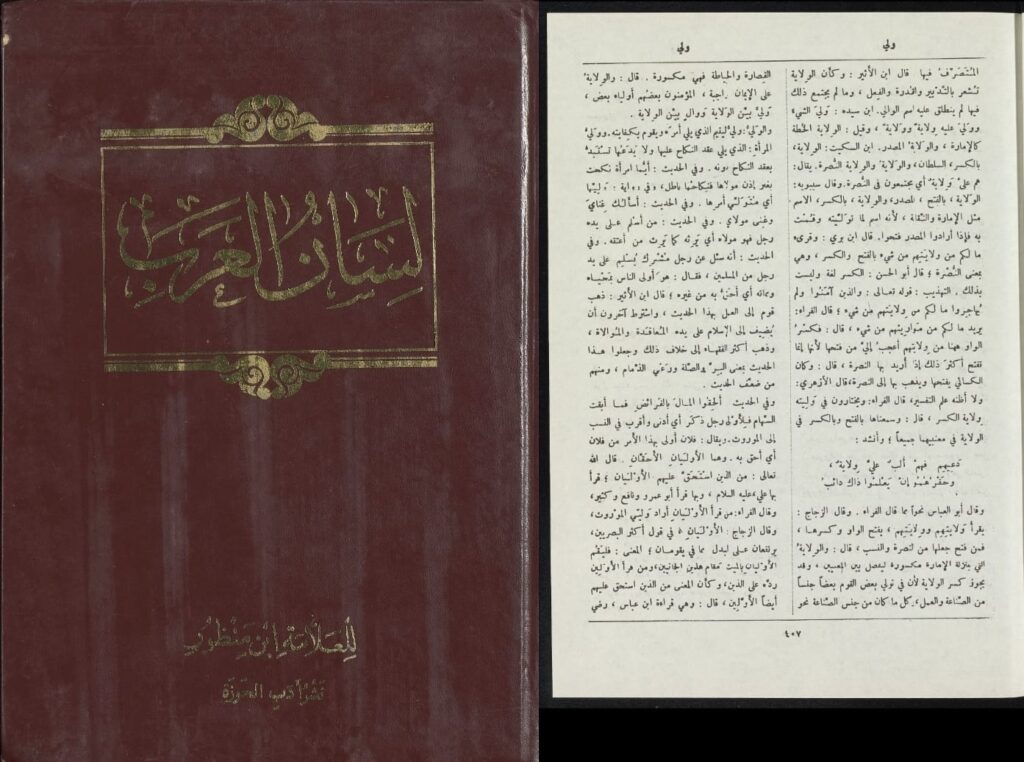
This is a functional definition rooted in authority and custodianship, not emotional attachment.
Although some lexicographers note a distinction between wilāyah (authority) and walāyah (loyalty or closeness), hadith manuscripts are not vowelled. The decisive factor is therefore usage, not vowelization. The Prophet ﷺ himself clarified the meaning of his wilāyah in an explicit and authoritative manner.

Prophetic Clarification: Wilāyah as Authority

In Ṣaḥīḥ al-Bukhārī (ḥadīth 6745), the Prophet ﷺ states:

أَنَا أَوْلَى بِالْمُؤْمِنِينَ مِنْ أَنْفُسِهِمْ … فَأَنَا وَلِيُّهُ

“I am more entitled (awlā) to the believers than their own selves … and I am his walī.”
This statement establishes a clear hierarchy of authority. The term awlā denotes priority and entitlement—meaning the Prophet’s judgment takes precedence even over a believer’s judgment about himself. This is not a statement of affection; it is a declaration of authority.
The Prophet ﷺ then demonstrates the practical application of this authority by assuming responsibility for believers’ debts and dependents. This example does not restrict the meaning of wilāyah to financial matters; rather, it illustrates how comprehensive authority manifests in real obligations.

The structure of the hadith is decisive:
1. Principle: “I am more entitled to the believers than their own selves.”
2. Application: “I am their walī.”
Thus, awlā establishes authority, and walī expresses its operative function.

Linguistic Convergence: Awlā, Walī, and Mawlā
Classical grammarians observed a strong semantic overlap between terms such as awlā (more entitled), aḥaqq (more rightful), walī, and mawlā when used in contexts of authority and guardianship.
What matters here is not abstract synonymy, but Prophetic usage: the Prophet ﷺ used awlā to define his relationship to the believers and then described himself as their walī. This establishes that, in his speech, wilāyah denotes authoritative priority, not mere support or friendship.
This clarification governs the interpretation of later Prophetic statements that use walī or mawlā in relation to others.

The Wilāyah of ʿAlī (ʿalayhi al-salām) “After Me”
Multiple sound Sunni narrations record the Prophet ﷺ saying:

عَلِيٌّ مِنِّي وَأَنَا مِنْهُ، وَهُوَ وَلِيُّ كُلِّ مُؤْمِنٍ مِنْ بَعْدِي

“ʿAlī is from me and I am from him, and he is the walī of every believer after me.”

The phrase “after me” (min baʿdī) is decisive. Love, respect, and moral support for ʿAlī were already obligatory during the Prophet’s lifetime. Adding “after me” contributes nothing if the meaning were merely affection. Its inclusion signals a post-Prophetic function.
At minimum, the phrase establishes that ʿAlī’s wilāyah is not confined to the Prophet’s lifetime. The burden therefore lies on the opponent to explain why the Prophet ﷺ explicitly extended this wilāyah beyond his own life if it referred only to love—something already binding upon the believers.
Classical Arabic usage of min baʿd consistently denotes a new phase following the conclusion of a prior one. The Qur’an uses this construction repeatedly to indicate succession and continuity after departure, not symbolic overlap.

Qur’anic Usage of Min Baʿd
The Qur’an employs min baʿd to mark transition after the end of a presence or authority:
• “What will you worship after me?” (2:133)
• “Then We made them successors after another people.” (10:14)
In each case, min baʿd establishes temporal succession. This Qur’anic pattern informs the Prophetic usage. The phrase fixes the timing of ʿAlī’s wilāyah as beginning when the Prophet’s own earthly leadership ends.
Had the intended meaning been assistance or companionship during the Prophet’s life, the phrase “after me” would be unnecessary.

Interim Conclusion
The Prophet(s) defined his own wilāyah as authoritative priority over the believers. When he declared ʿAlī to be the walī of every believer after him, he employed the same language of authority and fixed its application to the post-Prophetic period.
Linguistically, textually, and contextually, the hadith does not merely praise ʿAlī or encourage affection toward him. It situates him as the Prophet’s designated authority over the believers after the Prophet’s departure.