The Master of the worlds, the Messenger of Allah (s), states:
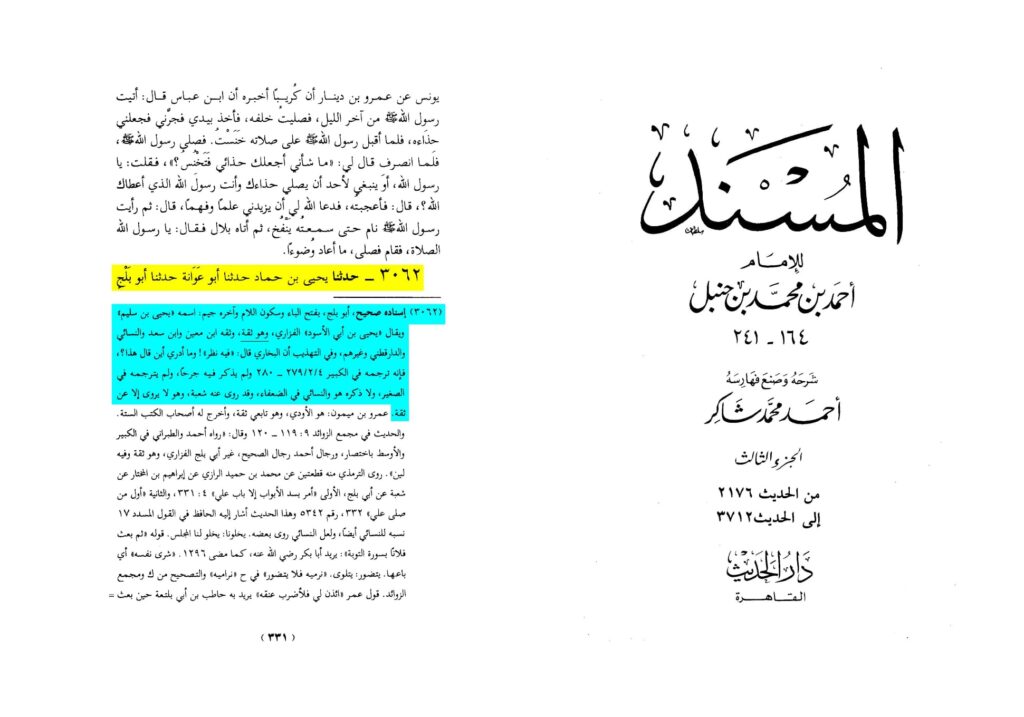
In Kitāb Faḍāʾil al-Ṣaḥāba (Hadith 947, p. 563):
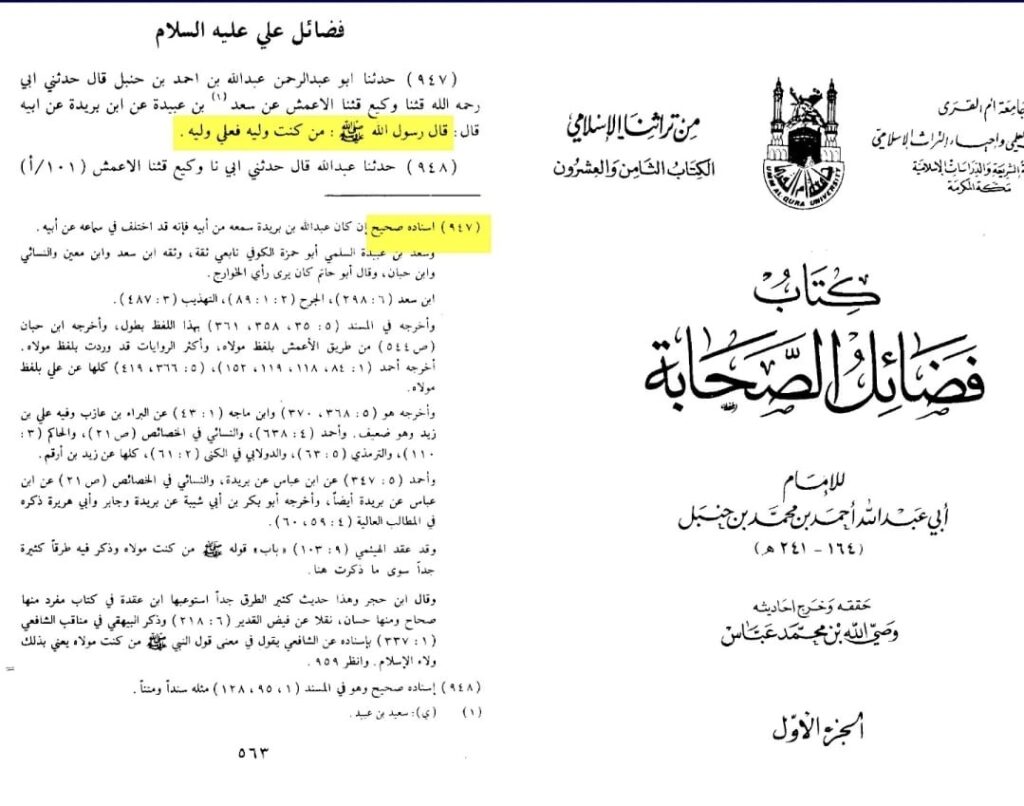
“حدثنا وكيع، قال: حدثنا الأعمش، عن سعد بن عبيدة، عن ابن بريدة، عن أبيه، قال: قال رسول الله صلى الله عليه وآله وسلم: **من كنت وليه فعلي وليه.”
ʿAbdullāh ibn Ahmad ibn Ḥanbal, who said that his father, Ahmad ibn Ḥanbal, reported to him that Rasulullah(s) said:“Whomever I am the Wali of, ʿAlī is his Wali.”
The chain is considered ṣaḥīḥ, but Wasiullah Khan introduces a caveat on the grading:
“Its chain is authentic (ṣaḥīḥ) if ʿAbd Allāh ibn Buraydah heard it from his father, for there is a difference of opinion regarding whether he actually did”.
Nonetheless, father-to-son transmissions by ʿAbdullāh ibn Buraydah appear elsewhere in the Sahāh Sittah, such as
Sunan Ibn Mājah 1874
https://sunnah.com/ibnmajah:1874
Sunan Ibn Mājah 1874
https://sunnah.com/ibnmajah:1875
Sunan an-Nasāʾī 3221
https://sunnah.com/nasai:3221
All three have been graded ṣaḥīḥ, confirming the reliability of the chain. Thus, the hadith’s authenticity is supported, and the caveat does not undermine the validity of this critical report establishing ʿAlī’s (as) Wilāyah.
Another narration further illustrates this authority:
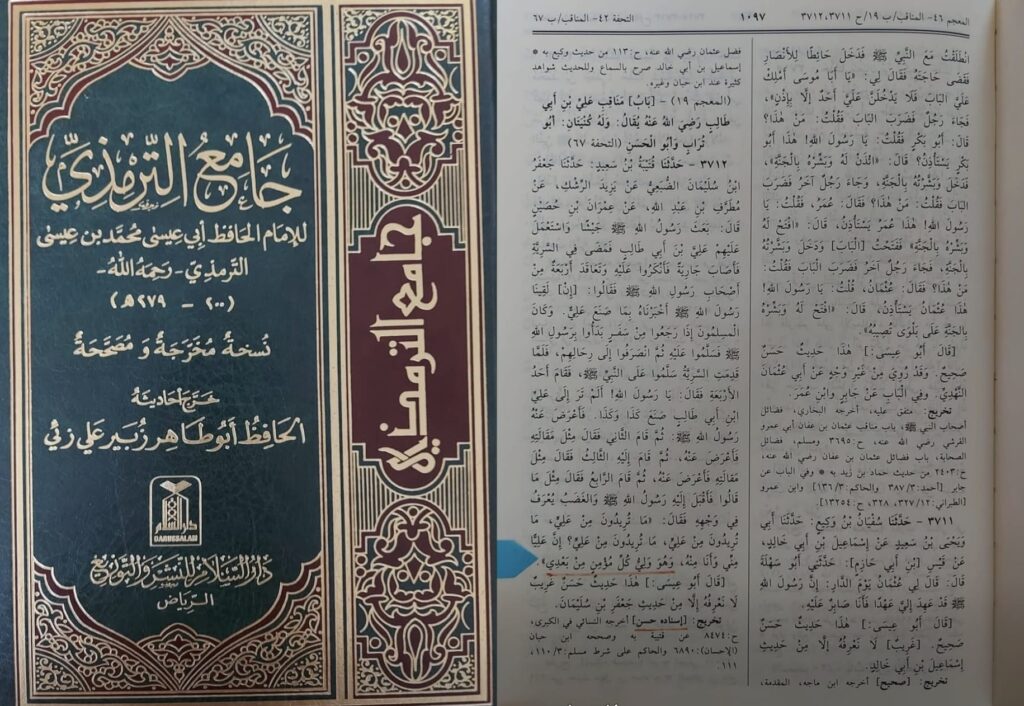
Jāmiʿ al-Tirmidhī:
حَدَّثَنَا قُتَيْبَةُ، قَالَ حَدَّثَنَا جَعْفَرُ بْنُ سُلَيْمَانَ الضُّبَعِيُّ، عَنْ يَزِيدَ الرِّشْكِ، عَنْ مُطَرِّفِ بْنِ عَبْدِ اللَّهِ، عَنْ عِمْرَانَ بْنِ حُصَيْنٍ، قَالَ:
بَعَثَ رَسُولُ اللَّهِ ﷺ جَيْشًا وَاسْتَعْمَلَ عَلَيْهِمْ عَلِيَّ بْنَ أَبِي طَالِبٍ … فَقَالَ ﷺ وَالْغَضَبُ يُعْرَفُ فِي وَجْهِهِ:
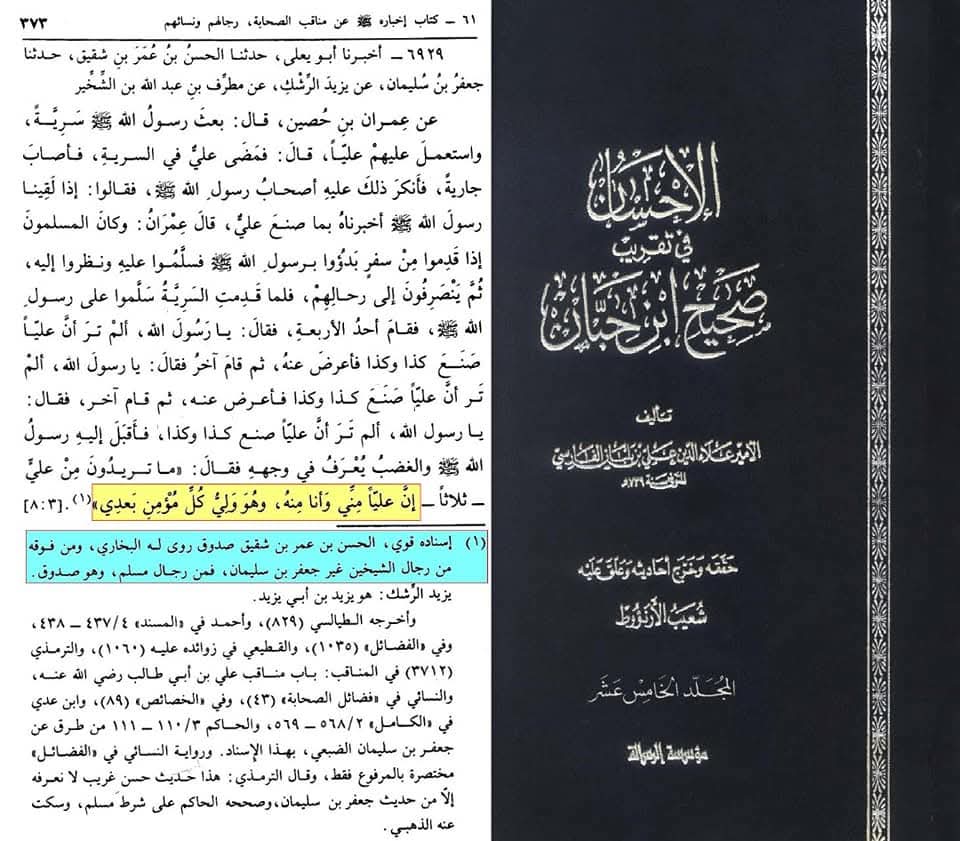
“مَا تُرِيدُونَ مِنْ عَلِيٍّ؟ إِنَّ عَلِيًّا مِنِّي وَأَنَا مِنْهُ وَهُوَ وَلِيُّ كُلِّ مُؤْمِنٍ مِنْ بَعْدِي.”
Narrated ʿImrān bin Ḥuṣayn:
The Messenger of Allah (s) dispatched an army and appointed ʿAlī ibn Abī Ṭālib as its commander. Upon their return, four Companions complained about ʿAlī. When the fourth repeated the accusation, the Prophet’s face changed with anger, and he said:
“What do you want from ʿAlī? Indeed, ʿAlī is from me, and I am from him, and he is the walī of every believer after me.”
This narration is supported by multiple sources, including:
• Musnad Abī Dāwūd al-Ṭayālisī, Vol. 4, Hadith 2875
• Musannaf Ibn Abī Shaybah, Vol. 11, Hadith 32657
• Musnad Ibn Ḥanbal, Vol. 16, Hadith 22908 – ṣaḥīḥ according to Aḥmad Muḥammad Shākir
• Faḍāʾil al-Ṣaḥābah by Ibn Ḥanbal, al-Nasāʾī, and others
• Ṣaḥīḥ Sunan al-Tirmidhī, Hadith 3712
Scholars Who Authenticated the Hadith (Full List, Sorted by Grading)
ṢAḤĪḤ
1. Ibn Ḥibbān – Al-Musnad al-Ṣaḥīḥ, Vol. 4, p. 193
2. Al-Ḥākim al-Nīsābūrī – Al-Mustadrak, Hadith 4652
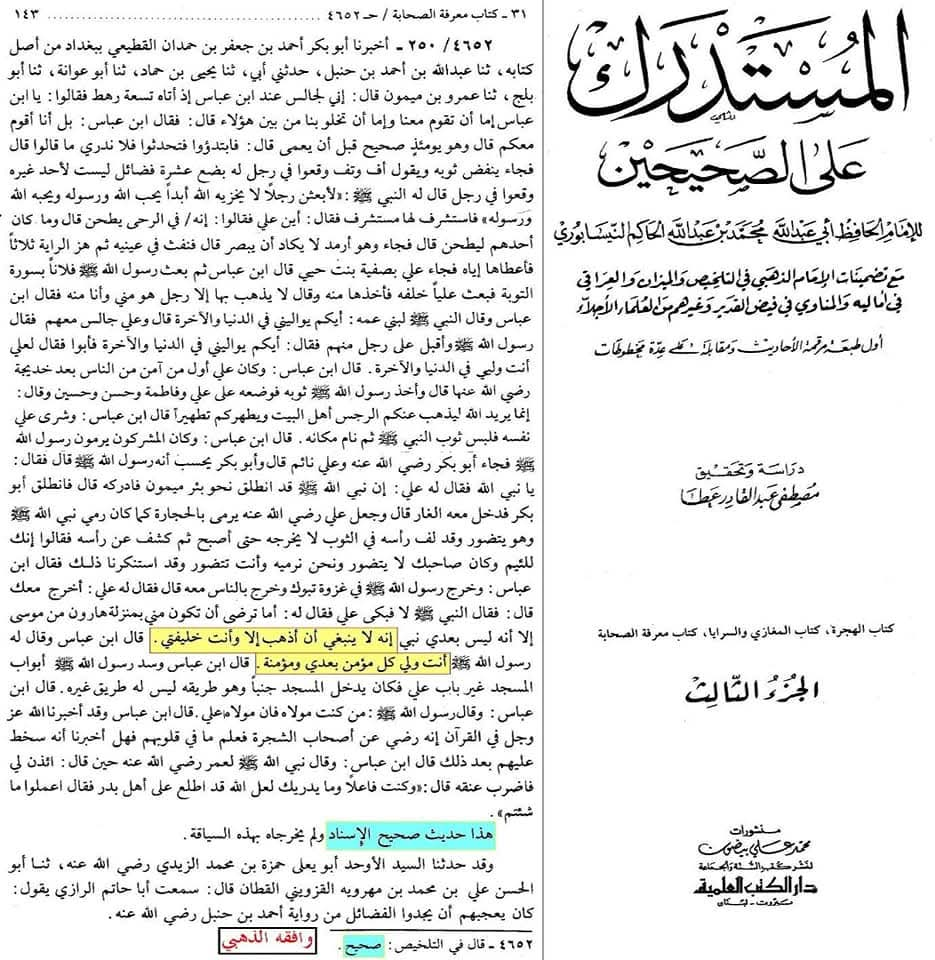
3. Al-Dhahabī – Talkhīṣ al-Mustadrak, 3/143
4. Ibn Ḥajar al-ʿAsqalānī – Al-Iṣābah, Vol. 4, p. 468
5. Al-Albānī – Silsilat al-Aḥādīth al-Ṣaḥīḥah, Vol. 5, p. 263, Hadith 2223
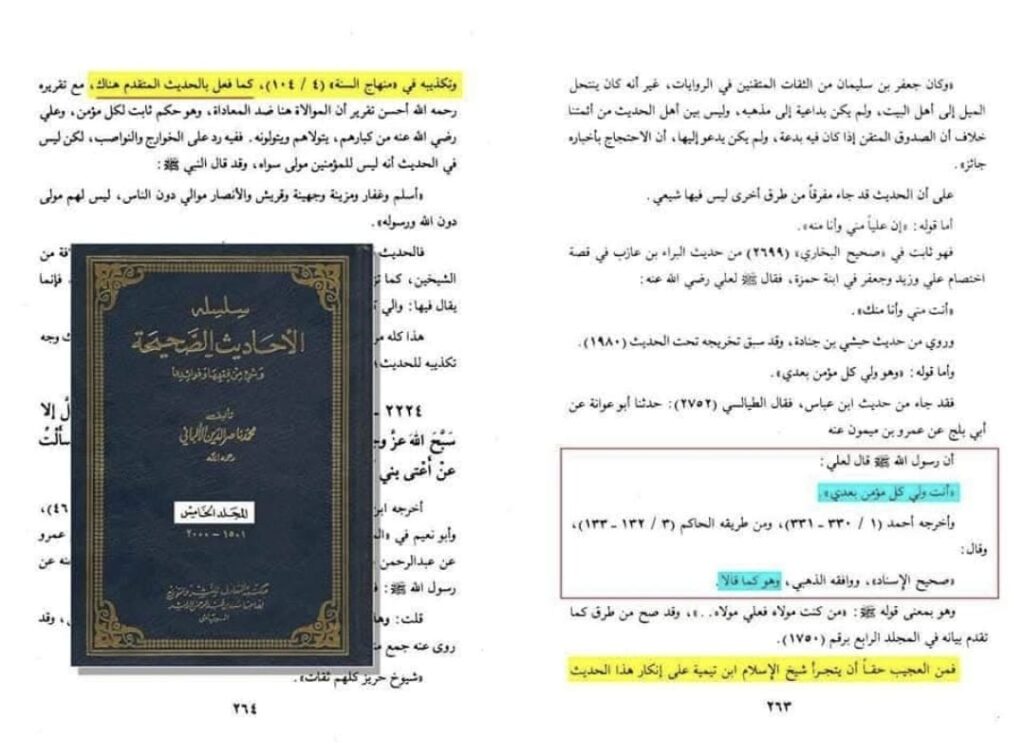
6. Ṣaḥīḥ Sunan al-Tirmidhī – Vol. 3, p. 521, Hadith 3712
7. Ṣaḥīḥ Mawārid al-Ẓamān – Vol. 2, p. 353
8. Shuʿayb al-Arnaʾūṭ – Al-Iḥsān, Vol. 15, p. 373, Hadith 6929; Siyar Aʿlām al-Nubalāʾ, p. 199
9. Ḥamzah Aḥmad al-Zayn – Musnad Aḥmad, Hadith 22908
10. Bāsim b. Fayṣal al-Jawwābrah – Kitāb al-Sunnah, Hadith 1221
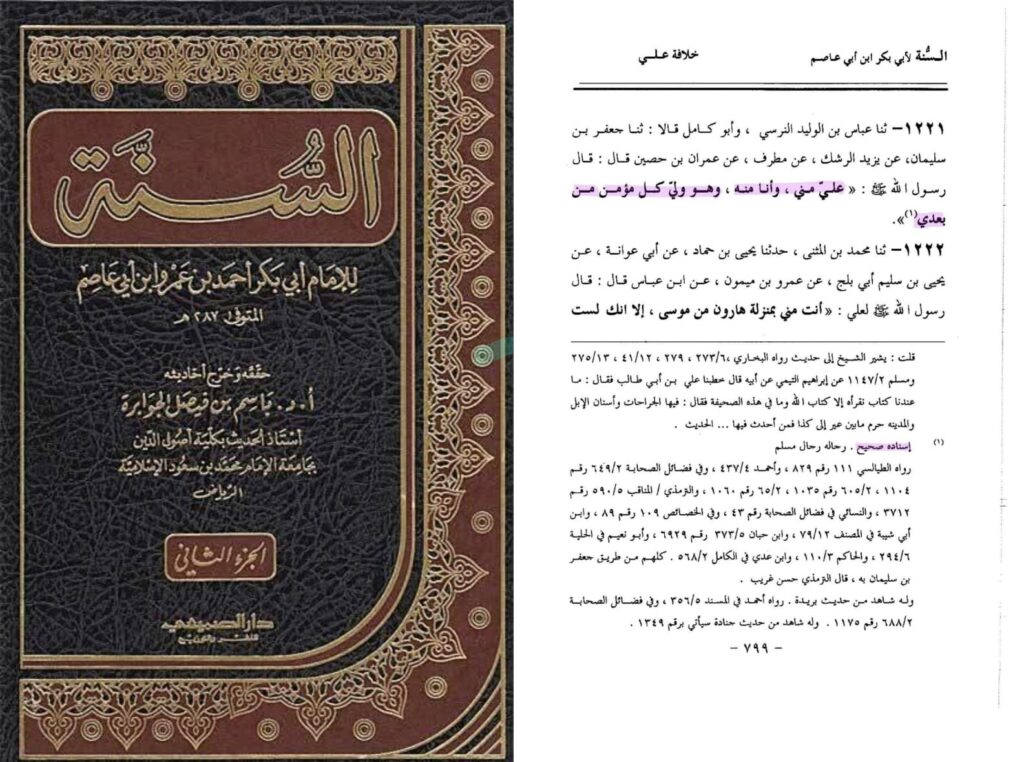
11. Abū Isḥāq al-Ḥuwainī – Tahdhīb Khaṣāʾiṣ al-Imām ʿAlī, p. 78
12. Ḥusayn Salīm Asad – Mawārid al-Ẓamān, Vol. 1, p. 134, Hadith 2203
13. Raʾid b. Ṣubray b. Abī ʿAlfah – Sunan al-Tirmidhī, p. 711, Hadith 3712
14. ʿAbd Allāh al-Turkī – Al-Bidāyah wa al-Nihāyah, Vol. 11, p. 43
15. Ibn ʿAbd al-Barr – Al-Istīʿāb, Vol. 3, p. 1092
16. Abū Yaʿlā al-Mawṣilī – Musnad Abī Yaʿlā, 1/293
17. Al-Shawkānī – Dar al-Ṣaḥābah, p. 127
18. Ḍiyāʾ al-Dīn al-Maqdisī – Al-Aḥādīth al-Mukhtaṣarah, Vol. 13, pp. 26–29
(Al-Ḥāfiẓ al-Suyūṭī and Ibn Badrān verified this collection as reliable except where noted in Ṣaḥīḥayn: Tadrīb al-Rāwī, 1/144; Al-Madkhal, p. 466)
ḤASAN
19. Al-Tirmidhī – Sunan al-Tirmidhī, Hadith 3721 (Ḥasan Gharīb)
20. Waṣī Allāh / Waliullah b. Muḥammad ʿAbbās – Faḍāʾil al-Ṣaḥābah, Vol. 2 (multiple narrations)
21. ʿAbd al-Malik b. ʿAbd Allāh b. Duhaysh – Al-Aḥādīth al-Mukhtārah, Vol. 13, p. 29
22. Umm Shuʿayb al-Wādiʿiyyah – Al-Ṣaḥīḥ al-Musnad min Faḍāʾil Ahl al-Bayt, p. 66
23. Al-Manāwī (Muḥammad b. Ibrāhīm al-Manāwī) – Kashf al-Manāhij, 5/290 (Ḥasan / Ṣaḥīḥ)
24. Dr. Muḥammad ʿAbd al-Muḥsin al-Turkī – Musnad Abī Dāwūd al-Ṭayālisī, 2/168 (Jaʿfar b. Sulaymān is ṣidūq)
25. Ibn ʿAdī – Al-Kāmil fī al-Ḍuʿafāʾ, 2/380
26. Al-Zayn al-ʿIrāqī – Fayḍ al-Qadīr, 4/357
27. Maḥmūd al-Ṭaḥḥān – Taysīr Muṣṭalaḥ al-Ḥadīth, p. 50
28. Ghulām Muṣṭafā Ẓāhir Amānpurī – Khaṣāʾiṣ Amīr al-Muʾminīn ʿAlī (Urdu), p. 155, Hadith 90
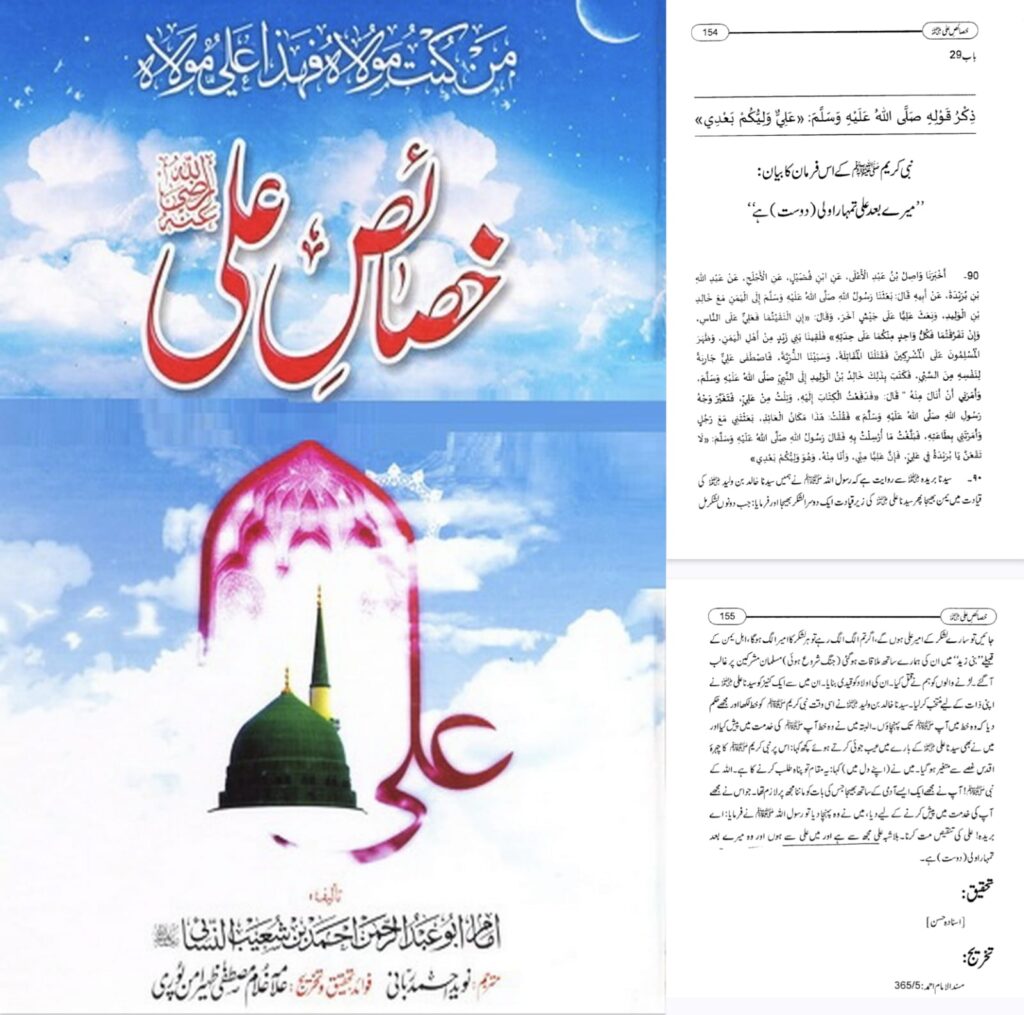
29. Zubair ʿAlī Zāʾī – Jāmiʿ al-Tirmidhī (Urdu), page 109, Hadith 3712
Commentary
This compilation demonstrates that the hadith is widely accepted by both classical and contemporary scholars across Sunni sources. The chains are strong, multiple narrations reinforce reliability, and minor caveats do not undermine authenticity.
Sunni hadith criticism does not require every individual chain to be perfect in isolation. A report can be authenticated because it is supported by multiple routes, corroboration, and scholarly acceptance. For this reason, even where a discussion exists about a specific link, the hadith remains reliable when the overall transmission is strong and reinforced by independent chains and by Sunni authorities who graded it Hasan or Sahih.:
1. Imam Mughaltay notes that when Tirmidhi considers a hadith authentic from a narrator, it reflects implicit recognition of that narrator’s trustworthiness (Sharh Sunan Ibn Majah, Vol. 1, p. 309).
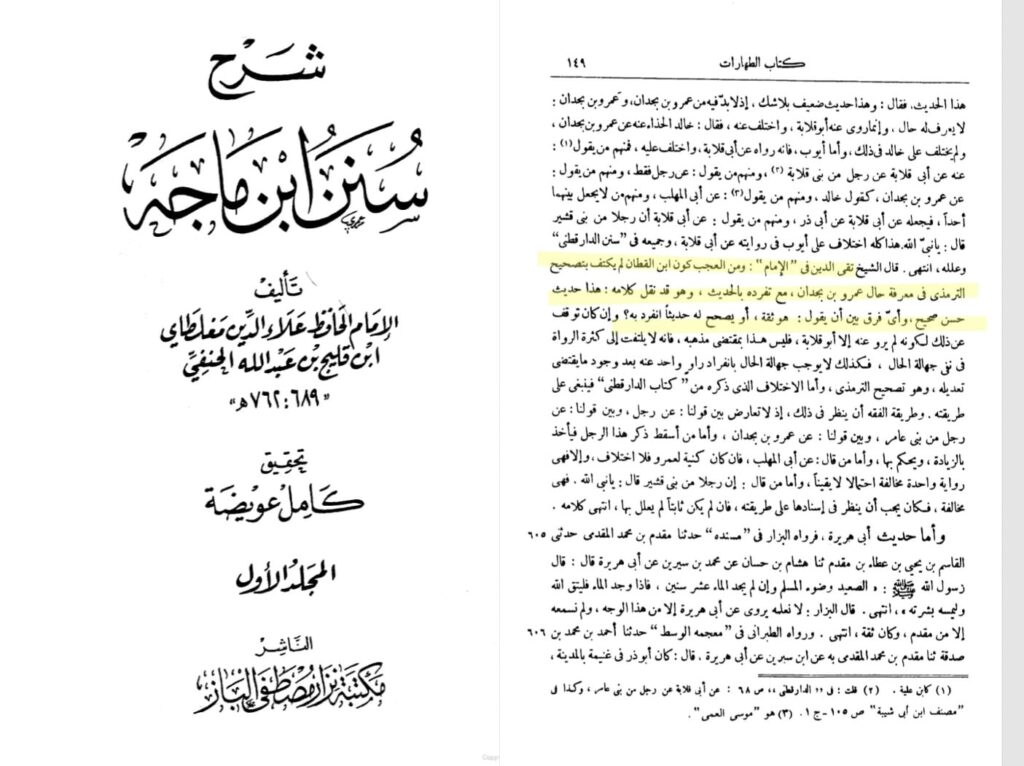
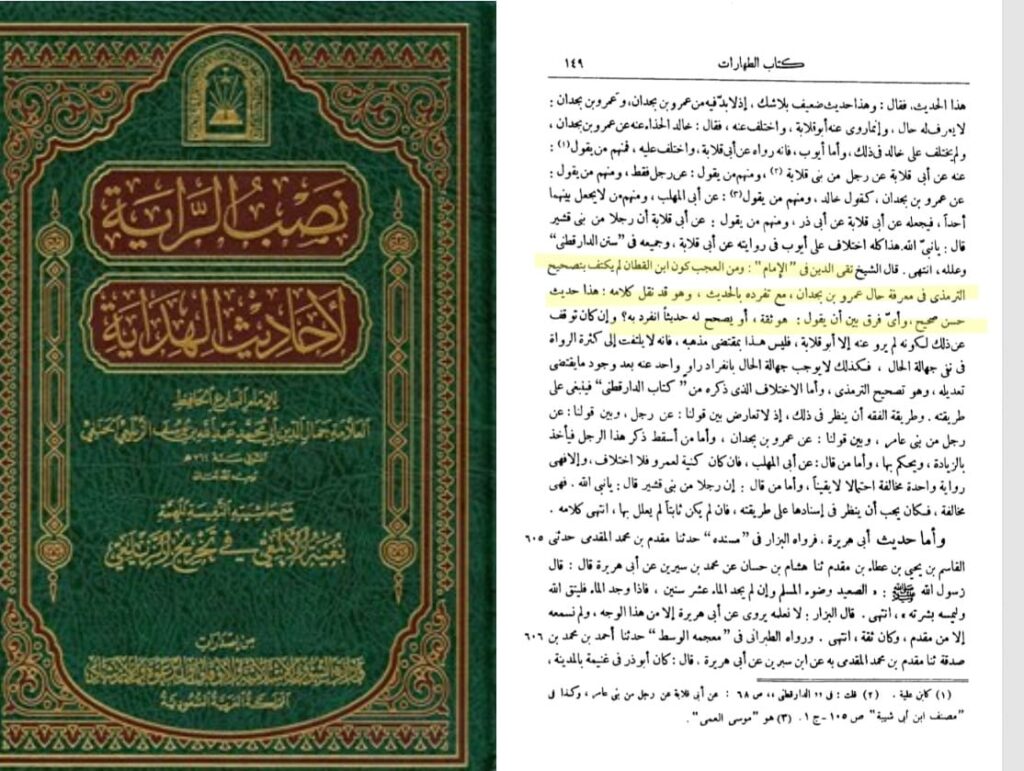
2. Sheikh Taqi al-Din observes in Al-Imam that Ibn al-Qattan graded a unique hadith as Hasan Sahih, showing the chain’s narrators are reliable (Nasab al-Ra’ya Li Ahadith al-Hidayah, Vol. 1, p. 149).
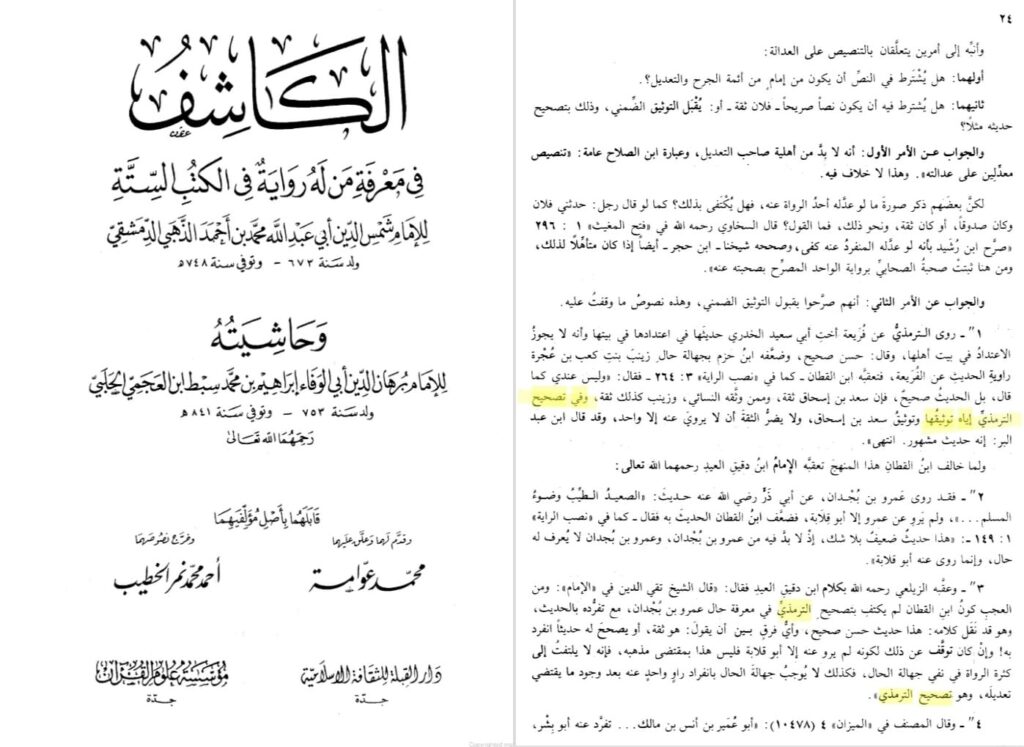
3. Shams al-Din al-Dhahabi remarks that Ibn al-Qattan’s assessment of narrators, corroborated by Ibn al-Mundhir and Ibn Hazm, indicates that authenticating the hadith confirms the narrators’ reliability (Al-Kashif fi Ma’rifa Man Lahu Riwaya fi al-Kutub al-Sitta, p. 25).
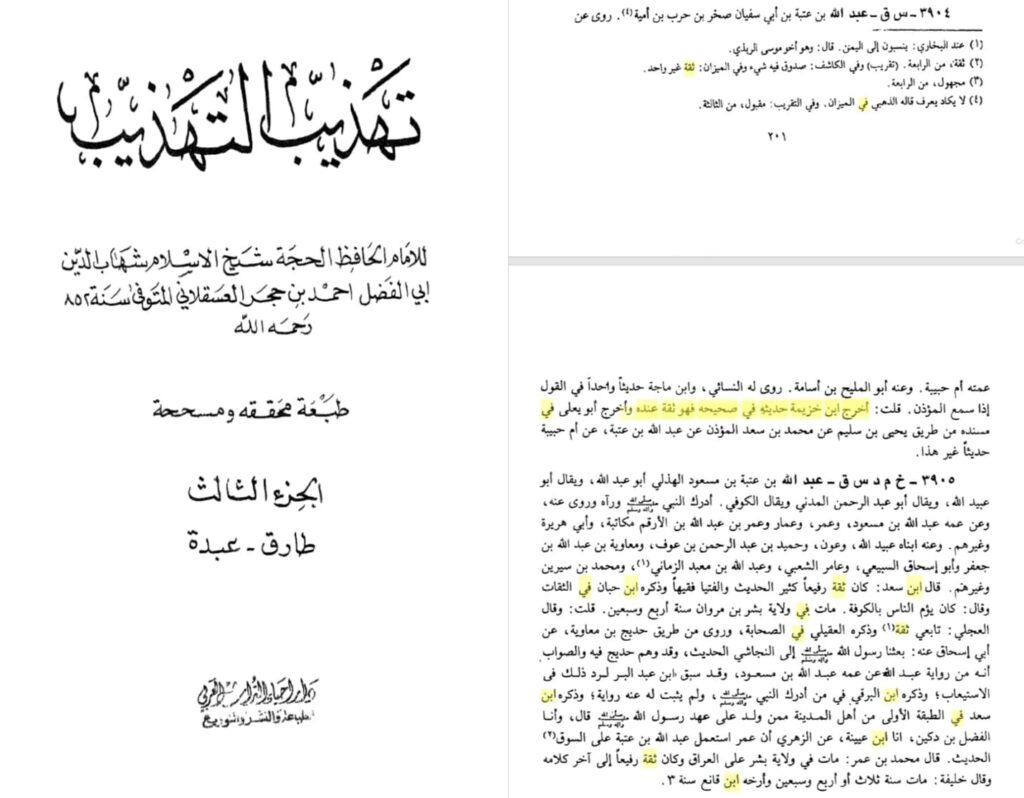
4. Ibn Hajar al-Asqalani explicitly states that inclusion in a Sahih compilation, such as by Ibn Khuzaymah, confirms the narrator’s trustworthiness (Tahdhib al-Tahdhib, Vol. 3, p. 202).
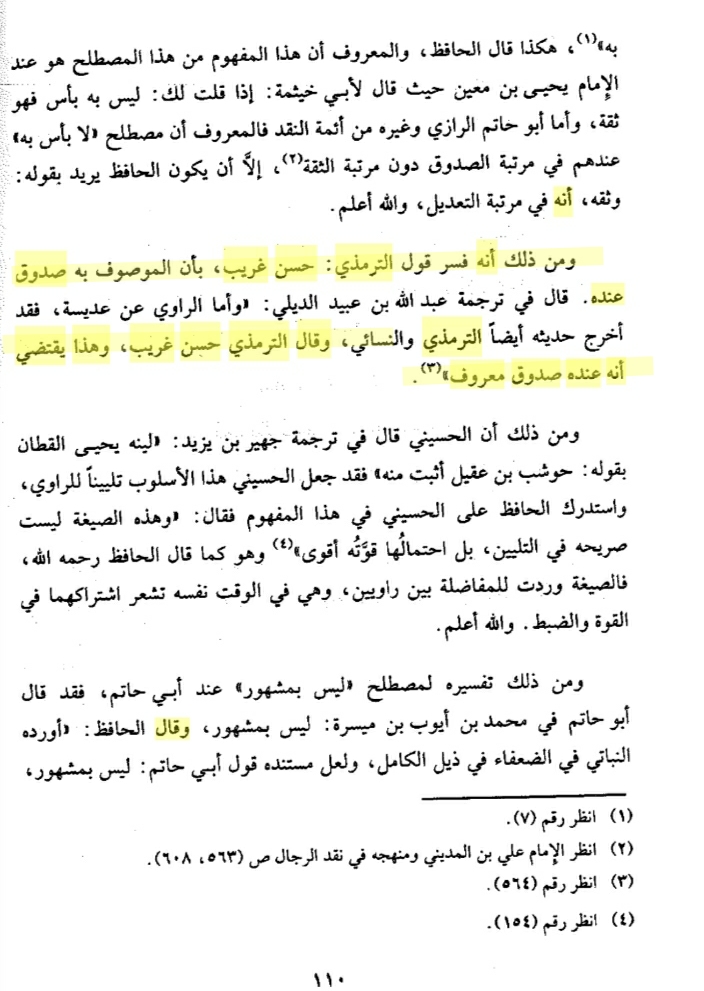
5. Tirmidhi and commentators note that a hadith graded Hasan Ghareeb demands recognition of the chain narrators as thiqah and well-known (Ta’jil al-Manfa’ah, Vol. 1, p. 110).
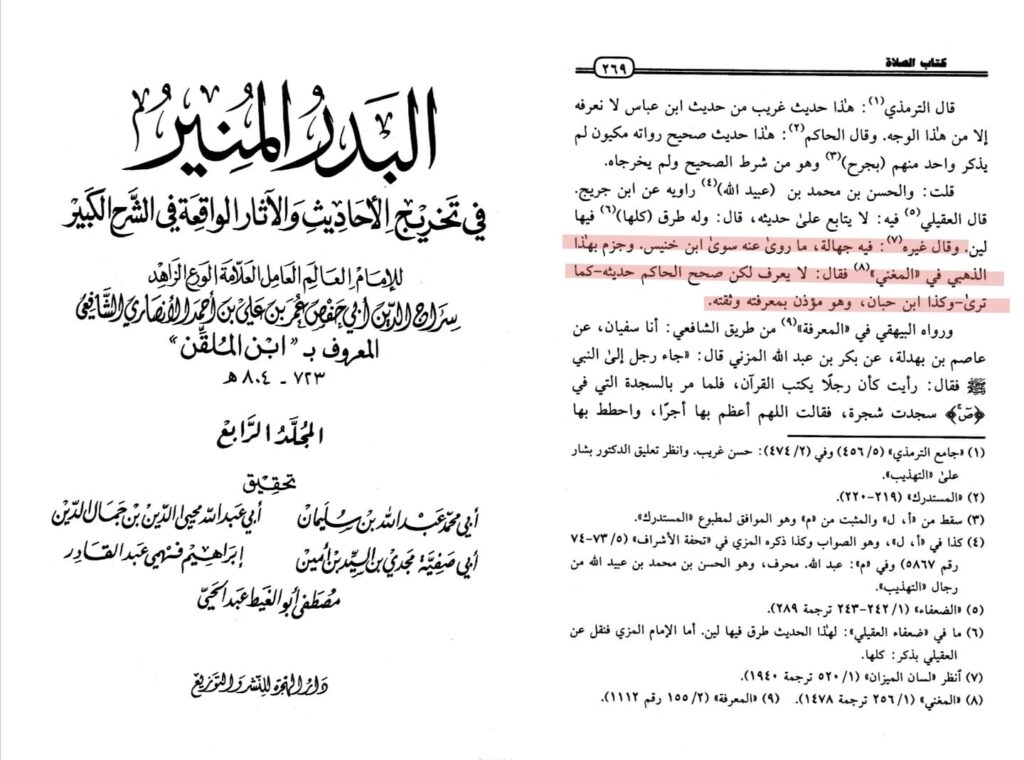
6. Ibn al-Mulaqqin records cases where narrators considered rare or obscure are nonetheless deemed trustworthy because the hadith itself is authenticated by authorities like al-Hakim and Ibn Hibban (Al-Badr al-Munir, Vol. 4, p. 269).
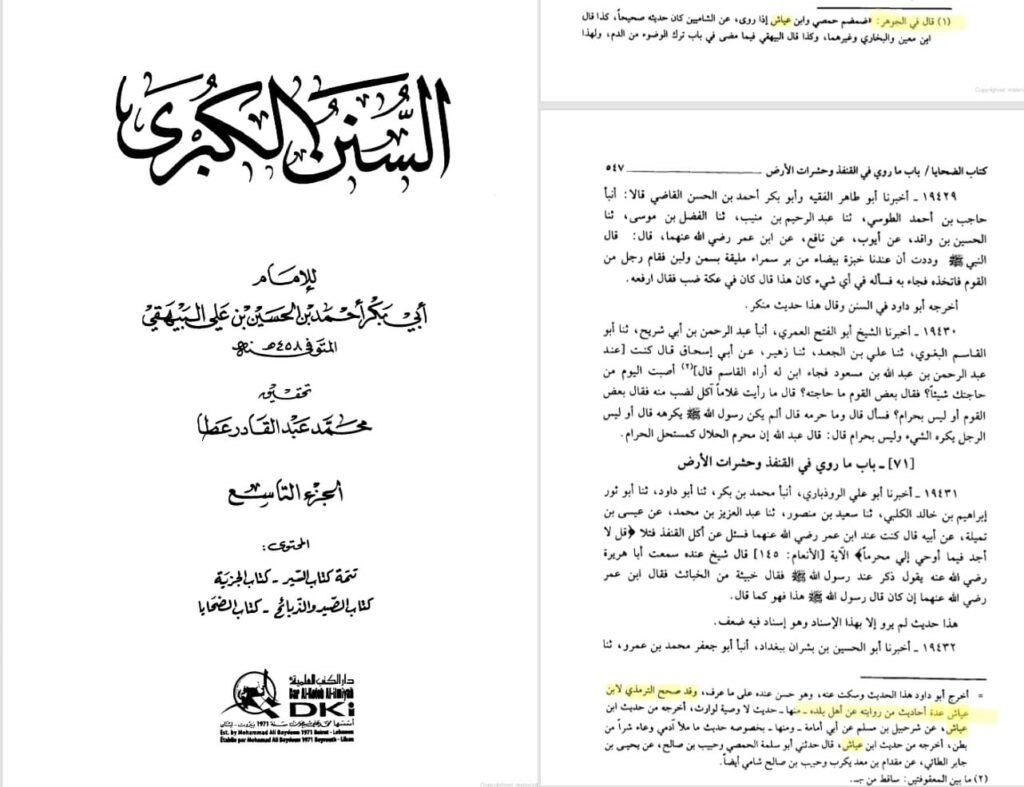
7. Imam Bayhaqi shows that narrations graded Hasan or Sahih—e.g., those transmitted by Ibn Ayyash—demonstrate the reliability of the chain (Sunan al-Kubra, Vol. 9, p. 547).
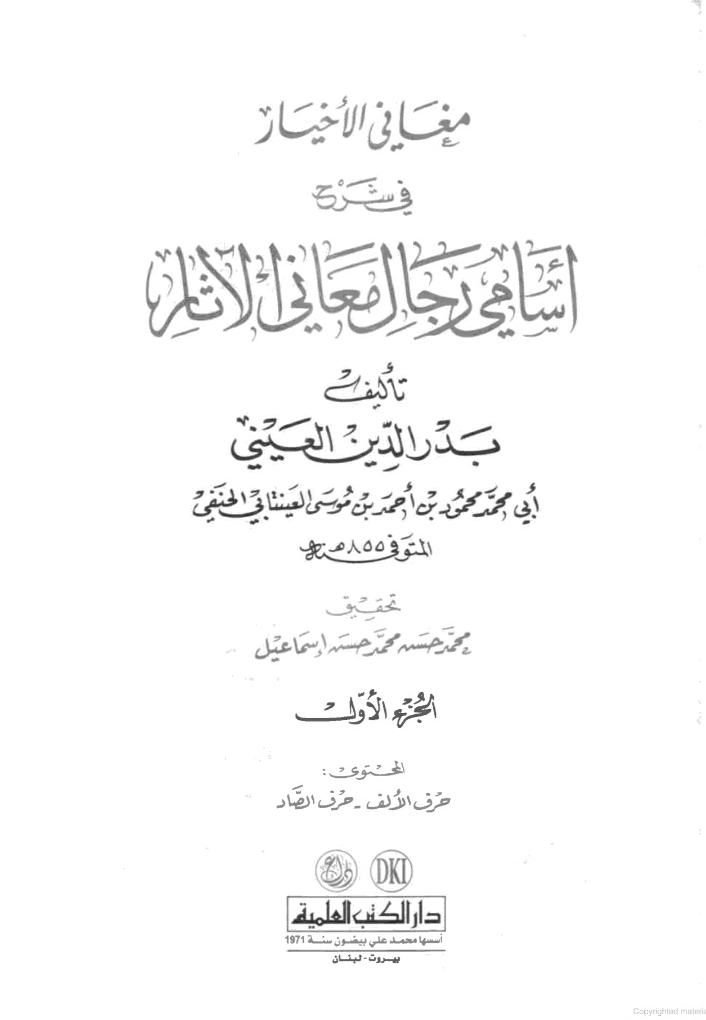
8. Imam Badr al-Din al-ʿAynī notes that even narrators deemed unknown by some are recognized as trustworthy if the hadith is authenticated (Maʿānī al-Akhyār, Vol. 1, p. 69).
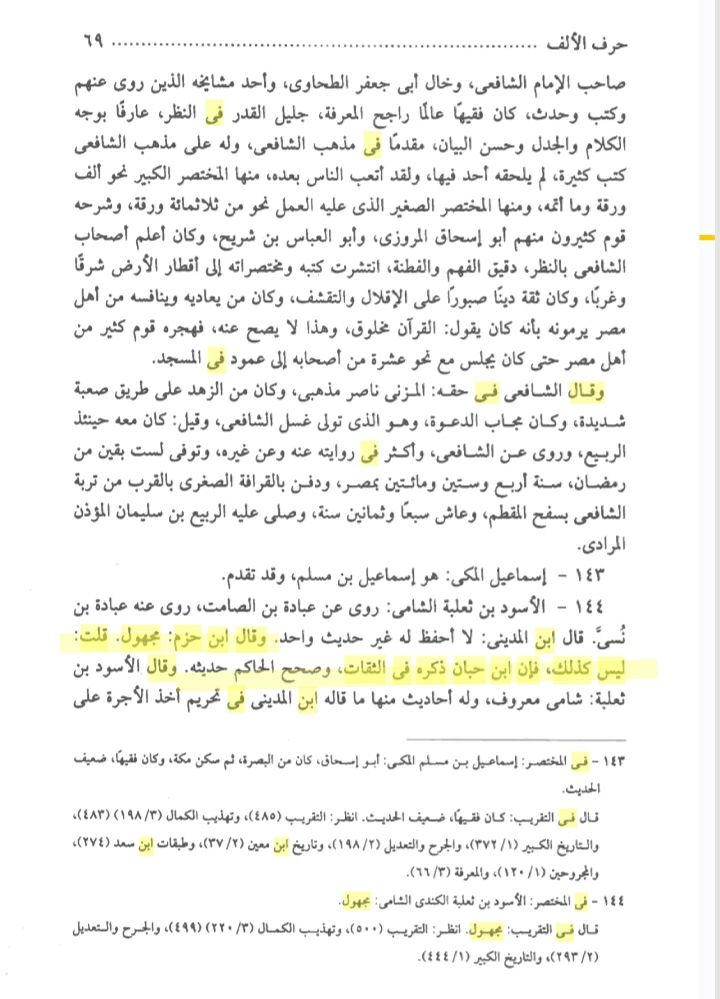
As such, when a hadith is graded Hasan or Sahih, this grading implicitly affirms the trustworthiness of every narrator in its chain. Therefore, in discussing the Hadth of Wilāyah, the authentication of the hadith automatically validates all the narrators, providing a firm scholarly foundation for relying on the text.
This hadith firmly establishes the Wilāyah of ʿAlī (as), showing that he is the appointed Wali over the believers, as designated by Rasulullah (s).
Chains of Transmission and Narrator Profiles This hadith, confirming the Wilāyah of ʿAlī (as), was transmitted through multiple independent chains (isnāds), which strengthens its authenticity.
Primary Companions Narrating the Hadith
• ʿImrān b. Ḥusayn
• Buraydah
• Ibn ʿAbbās
Chains of Transmission
1. Chain via ʿImrān b. Ḥusayn
Transmission Sequence (Tarteeb al-Isnād):
ʿImrān b. Ḥusayn → Muṭrif b. ʿAbd Allah b. al-Shakhīr → Yazīd al-Rashk → Jaʿfar b. Sulaymān → Qutaybah b. Saʿīd → al-Ḥasan b. ʿUmar b. Shaqīq → ʿAbbās b. al-Walīd al-Narsī → Abū Kāmil → ʿAffān b. Muslim → ʿAbd al-Razzāq → Bishr b. Hilāl → ʿAbd al-Salām b. ʿUmar
Narrator Reliability & References
ʿImrān b. Ḥusayn Companion, highly trusted
Muṭrif b. ʿAbd Allah Thiqa, pious, knowledgeable; al-Dhahabī, Siyar Aʿlām al-Nubalāʾ vol. 4
Yazīd al-Rashk Strong pillar; reliable per Ibn Ḥibbān, Ibn Maʿīn, Tahdhīb al-Kamāl
Jaʿfar b. Sulaymān Reliable; minor affection for Ahl al-Bayt does not harm narrations (Ibn Ḥibbān, Ibn Ḥajar)
Observation: This chain includes additional details such as the story of the female captive.
2. Chain via Ibn ʿAbbās
Transmission Sequence (Tarteeb al-Isnād):
Ibn ʿAbbās → ʿAbd Allah b. Buraydah → ʿAmr b. Maymūn → Yazīd al-Rashk → Jaʿfar b. Sulaymān → Qutaybah b. Saʿīd → al-Ḥasan b. ʿUmar b. Shaqīq → ʿAbbās b. al-Walīd al-Narsī → Abū Kāmil → ʿAffān b. Muslim → ʿAbd al-Razzāq → Bishr b. Hilāl → ʿAbd al-Salām b. ʿUmar
Narration:
رواه ابن عباس قال: بعث رسول الله صلى الله عليه وآله وسلم سرية واستعمل عليهم عليا، فأقبل إليهم علي، فقال: ما تريدون من علي؟ عليا مني وأنا منه وهو ولي كل مؤمن بعدي
“The Messenger of Allah ﷺ sent a detachment and appointed ʿAlī over them. ʿAlī approached, and the Prophet ﷺ said: ‘What is your concern with ʿAlī? ʿAlī is from me, and I am from him, and he is the guardian (walī) of every believer after me.’” (Musnad Aḥmad, vol. 3, p. 331)