
Ehsan ilahi Zaheer And Killing of Uthman

Nov 15, 2025 | A Scholarly Rebuttal to the Works of Ehsan Ilahi Zaheer


Imam Ali (as) and the Uthman Crisis: Upholding Justice Amid Grievances

Iḥsān Ilāhī Ẓahīr, in Shī‘a and Ahl al-Bayt (p. 256), criticises Shi‘a scholars for allegedly claiming that Imam Ali (as) permitted the killing of Uthman ibn ʿAffan:
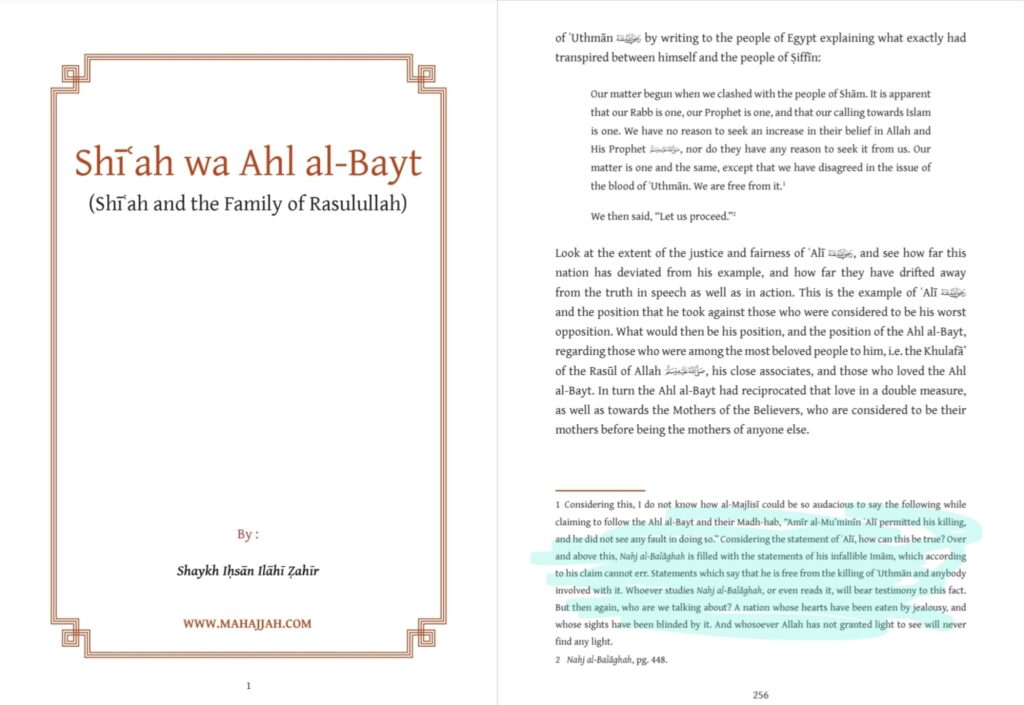
 

“Considering this, I do not know how al-Majlisī could be so audacious to say the following while claiming to follow the Ahl al-Bayt and their Madh-hab, ‘Amīr al-Mu’minīn ʿAlī permitted his killing, and he did not see any fault in doing so.’ Considering the statement of ʿAlī, how can this be true? Over and above this, Nahj al-Balāghah is filled with the statements of his infallible Imām, which according to his claim cannot err. Statements which say that he is free from the killing of ʿUthmān and anybody involved with it. Whoever studies Nahj al-Balāghah, or even reads it, will bear testimony to this fact. But then again, who are we talking about? A nation whose hearts have been eaten by jealousy, and whose sights have been blinded by it. And whosoever Allah has not granted light to see will never find any light.”

Al-Majlisī’s statement that Amīr al-Mu’minīn ʿAlī (as) “permitted [ʿUthmān’s] killing” must be read with precision. Historical records and ʿAlī’s (as) own statements make clear that, while he recognised the legitimacy of public grievances against ʿUthmān and did not obstruct those acting on them, he neither personally participated in the killing nor encouraged anyone to commit it.

In other words, ʿAlī (as) distinguished between acknowledging the justice of popular dissent and being complicit in violent acts. He understood the public’s grievances and acted with moral and judicial prudence, yet he remained personally uninvolved in the aggression. This crucial distinction provides the necessary framework for examining his conduct in the historical record:

Reply One: Distinguishing Personal Innocence from Recognition of Grievances

Historical records, particularly Sunni sources, clarify this matter. Imam Ali (as) did not personally participate in the killing of ʿUthmān, nor did he give any explicit permission to commit it. At the same time, he recognised that the public grievances against ʿUthmān were legitimate. These two realities are not contradictory. One can maintain personal innocence and distance from culpability while simultaneously understanding or acknowledging the validity of public dissent. To illustrate logically: a teacher may not beat a student herself but may recognize that the student’s disobedience justifies disciplinary action. She neither encourages violence nor participates in it, yet she sees the outcome as appropriate. Similarly, Imam Ali (as) neither aided nor abetted ʿUthmān’s killing but understood the legitimacy of the opposition’s grievances and did not obstruct them.

Reply Two: Imam Ali (as) and the Egyptian Delegation — Integrity Amidst Sedition

Ibn Shabbah al-Namiri (d. 262H), in Tarikh al-Madina, records that when letters arrived from Egypt reporting ʿUthmān’s harmful orders, Imam Ali (ra) responded with judicial prudence:

حَدَّثَنَا عَمْرُو بْنُ الْحُبَابِ قَالَ: حَدَّثَنَا عَبْدُ الْمَلِكِ بْنُ هَارُونَ بْنِ عَنْتَرَةَ، عَنْ أَبِيهِ، عَنْ جَدِّهِ قَالَ: لَمَّا كَانَ مِنْ أَمْرِ عُثْمَانَ رَضِيَ اللَّهُ عَنْهُ مَا كَانَ قَدِمَ قَوْمٌ مِنْ مِصْرَ مَعَهُمْ صَحِيفَةٌ صَغِيرَةُ الطَّيِّ، فَأَتَوْا عَلِيًّا رَضِيَ اللَّهُ عَنْهُ فَقَالُوا: إِنَّ هَذَا الرَّجُلَ قَدْ غَيَّرَ وَبَدَّلَ، وَلَمْ يَسِرْ مَسِيرَةَ صَاحِبَيْهِ، وَكَتَبَ هَذَا الْكِتَابَ إِلَى عَامِلِهِ بِمِصْرَ : أَنْ خُذْ مَالَ فُلَانٍ وَاقْتُلْ فُلَانًا وَسَيِّرْ فُلَانًا، فَأَخَذَ عَلِيٌّ الصَّحِيفَةَ فَأَدْخَلَهَا عَلَى عُثْمَانَ فَقَالَ: أَتَعْرِفُ هَذَا الْكِتَابَ؟ فَقَالَ: «إِنِّي لَأَعْرِفُ الْخَاتَمَ» ، فَقَالَ اكْسِرْهَا فَكَسَرَهَا. فَلَمَّا قَرَأَهَا قَالَ: «لَعَنَ اللَّهُ مَنْ كَتَبَهُ وَمَنْ أَمْلَاهُ» . فَقَالَ لَهُ عَلِيٌّ رَضِيَ اللَّهُ عَنْهُ: أَتَتَّهِمُ أَحَدًا مِنْ أَهْلِ بَيْتِكَ؟ قَالَ: «نَعَمْ» . قَالَ: مَنْ تَتَّهِمُ؟ قَالَ: «أَنْتَ أَوَّلُ مَنْ أَتَّهِمُ» ، قَالَ فَغَضِبَ عَلِيٌّ رَضِيَ اللَّهُ عَنْهُ فَقَامَ وَقَالَ: وَاللَّهِ لَا أُعِينُكَ وَلَا أُعِينُ عَلَيْكَ حَتَّى أَلْتَقِيَ أَنَا وَأَنْتَ عِنْدَ رَبِّ الْعَالَمِينَ

Abd al-Malik, narrating from his father and grandfather, reports that when the sedition against ʿUthmān (ra) arose, a group came from Egypt carrying a small letter. They told ʿAlī (ra): “This man has altered and changed… He has written this letter to his governor in Egypt: seize wealth, kill, and exile people.” Ali (ra) presented it to ʿUthmān (ra) and asked: “Do you recognize this letter?” He replied: “Indeed, I recognize the seal.” Ali said: “Break it open,” and it was read. ʿUthmān cursed the author and the scribe. Ali asked: “Do you suspect anyone from your household?” He said: “Yes.” Ali asked: “Whom do you suspect?” He replied: “You are the first I suspect.” Ali became angry and said: “By Allah! I shall neither help you nor oppose you until we meet before the Lord of the Worlds.” (Ibn Shabbah al-Namiri, Tarikh al-Madina, pp. 1154–1155, 1167)
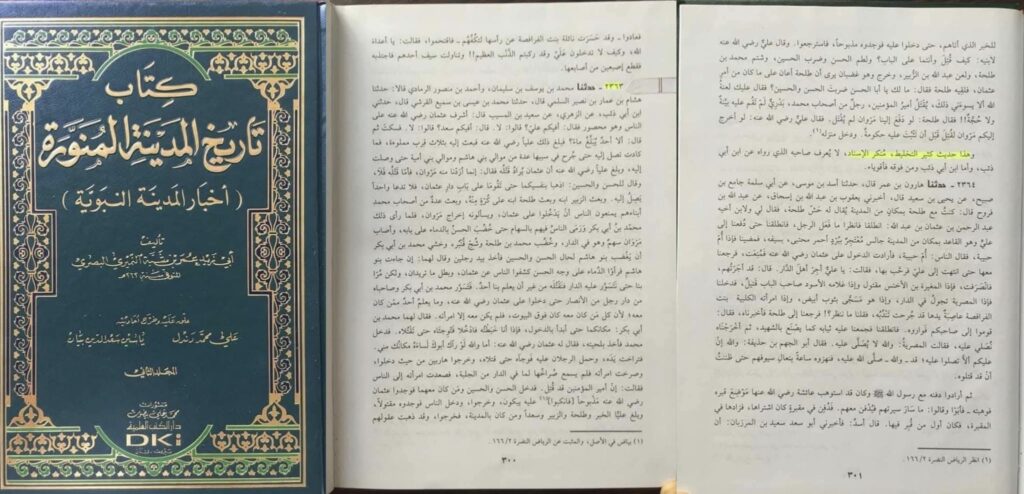
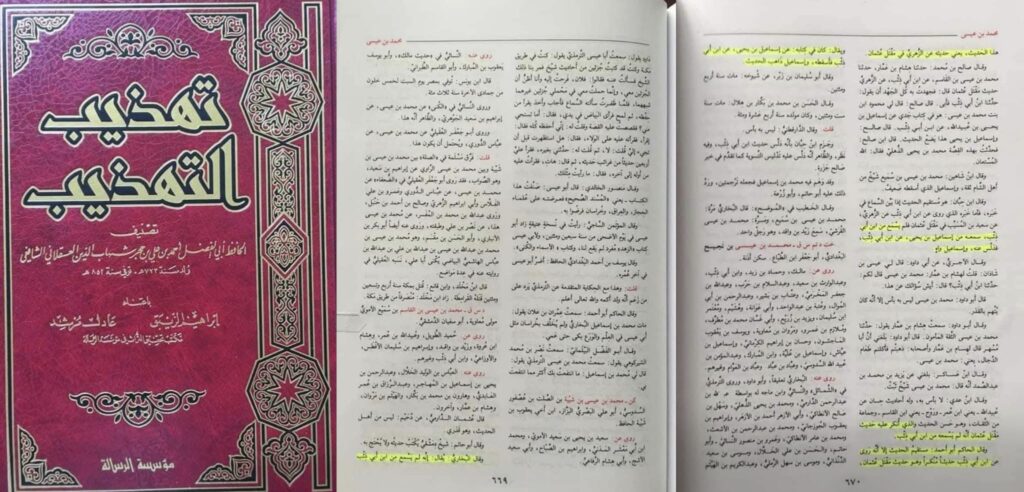
This narration captures a decisive fracture between Imām ʿAlī (as) and ʿUthmān, exposing not only the growing distrust within the caliph’s circle but also the Imām’s integrity in dealing with the grievances of the Egyptian delegation. The episode begins with the Egyptian delegation seeking out Imām ʿAlī (as), rather than any of ʿUthmān’s inner circle, to lodge their complaint. This fact alone is telling. It demonstrates that the aggrieved parties regarded Imām ʿAlī (as) as a just and impartial authority — someone they could trust to mediate with fairness.

When they presented the forged letter, which bore ʿUthmān’s seal and contained orders to kill and confiscate property, Imām ʿAlī (as) did not act rashly. Instead, he personally took the document to ʿUthmān to verify its authenticity, fulfilling both the moral and procedural obligations of justice. This shows that Imām ʿAlī (as) was not part of any conspiracy against ʿUthmān. On the contrary, his actions display his commitment to uncovering the truth and preventing bloodshed.

However, when confronted with the letter, ʿUthmān’s reaction was both defensive and paranoid. After initially acknowledging the authenticity of his own seal, he condemned the act but then accused Imām ʿAlī (as) of being the one responsible for dictating or facilitating it. This accusation was absurd, as Imām ʿAlī (as) was the very one who had brought the matter to his attention in good faith. It reflected not reason but a state of fear and insecurity. ʿUthmān’s caliphate had become plagued by mistrust, nepotism, and public outrage; rather than confronting the corruption surrounding him, he lashed out at the one man whose integrity was beyond reproach.

Imām ʿAlī’s (as) dignified yet firm response — “By Allah! I shall neither help you nor oppose you until we meet before the Lord of the Worlds” — encapsulates his moral independence. He refused to align himself either with ʿUthmān’s oppressive regime or with any faction pursuing personal vendettas. This statement symbolised his withdrawal of political and moral support from a leadership that had become unjust, without descending into rebellion or opportunism.

Thus, this narration reinforces two vital truths: first, that Imām ʿAlī (as) maintained communication with the aggrieved factions out of a duty to mediate and uphold justice — not out of sedition or sympathy for rebellion; and second, that ʿUthmān’s own conduct, nepotism, and paranoia alienated even the most principled companions. The Imām’s refusal to aid him henceforth was not treachery, but a principled stand — a statement that accountability before Allah (swt) would ultimately expose every falsehood.

Reply Three: Imam Ali (as) and the Siege of ʿUthmān — Justice Over Sympathy

During ʿUthmān’s siege, Umm Ḥabībah requested protection for those inside. Imām ʿAlī (as) granted it for everyone except Naʿthal and Shaqiyy, making clear that ʿUthmān (ra) and his key enabler would not be shielded as both were directly responsible for the situation that had transpired:

حَدَّثَنَا مُوسَى بْنُ إِسْمَاعِيلَ قَالَ: حَدَّثَنَا يُوسُفُ بْنُ الْمَاجِشُونِ قَالَ: حَدَّثَنِي أَبِي أَنَّ أُمَّ حَبِيبَةَ زَوْجَ النَّبِيِّ صَلَّى اللهُ عَلَيْهِ وَسَلَّمَ وَرَضِيَ اللَّهُ عَنْهَا حِينَ حُصِرَ عُثْمَانُ رَضِيَ اللَّهُ عَنْهُ حُمِلَتْ حَتَّى وُضِعْتْ بَيْنَ يَدَيْ عَلِيٍّ رَضِيَ اللَّهُ عَنْهُ فِي خِدْرِهَا وَهُوَ عَلَى الْمِنْبَرِ فَقَالَتْ: «أَجِرْ لِي مَنْ فِي الدَّارِ» . قَالَ نَعَمْ إِلَّا نَعْثَلًا وَشَقِيًّا، قَالَتْ: «فَوَاللَّهِ مَا حَاجَتِي إِلَّا عُثْمَانُ وَسَعِيدُ بْنُ الْعَاصِ» . قَالَ: مَا إِلَيْهِمَا سَبِيلٌ. قَالَتْ: «مَلَكْتَ يَا ابْنَ أَبِي طَالِبٍ فَأَسْجِحْ» قَالَ: أَمَا وَاللَّهِ مَا أَمَرَكِ اللَّهُ وَلَا رَسُولُهُ

Musa ibn Isma’il narrated to us, he said: Yusuf ibn al-Majishun narrated to us, he said: My father narrated to me that when ‘Uthman (ra) was besieged, Umm Habiba, the wife of the Prophet (ra) — was carried until she was brought before ‘Ali (ra) in her private quarters while he was on the pulpit. She said, “Grant protection for those who are in the house.”

He said, “Yes, except for Na‘thal and the Shaqiyy (wicked one).”

She said, “By Allah, my only concern is for ‘Uthman and Sa‘id ibn al-‘As.”

He said, “There is no way for them.”

She said, “You have power now, O son of Abu Talib, so be gentle.”

He replied, “By Allah, neither Allah nor His Messenger commanded you (to say that).” (Ibn Shabbah al-Namiri, Tarikh al-Madina, pp. 1154–1155, 1167)

This narration alone dismantles the common Sunni narrative that those who besieged ʿUthmān were seditious troublemakers acting without legitimate cause, and that ʿUthmān was an innocent ruler unjustly attacked. On the contrary, it demonstrates that Imām ʿAlī (as) sympathised with the grievances of the people and regarded ʿUthmān as responsible for the situation in which he found himself. His words and actions display no trace of sympathy or concern for ʿUthmān’s safety — rather, they show moral alignment with those who viewed ʿUthmān’s downfall as deserved.

Umm Ḥabībah’s act of appealing directly to Imām ʿAlī (as) shows that he was recognised by the people as possessing legitimate moral and political authority. If he had no influence or leadership at that time, the Prophet’s (s) widow would have had no reason to approach him. Her appeal, and his authoritative refusal, confirm that the community regarded him as the decisive figure capable of granting or withholding protection.

Most revealing, however, is Imām ʿAlī’s (as) choice of words. In refusing to grant protection, he explicitly excluded “Naʿthal” — a term that, as explained by Ibn al-Athīr al-Jazārī, was a derogatory nickname used by ʿUthmān’s opponents to mock and humiliate him. Ibn al-Athīr states:

«نَعْثَلَ» (هـ) فِي مَقْتَل عُثْمَانَ «لَا يَمْنَعنك مكانُ ابنِ سَلَامٍ أَنْ تَسُبَّ نَعْثَلًا» كَانَ أَعْدَاءُ عُثْمَانَ يُسَمُّونَهُ نَعْثَلا، تَشْبِيهًا بِرَجُلٍ مِنْ مِصر، كَانَ طَوِيلَ اللِّحْيَةِ اسْمُه نَعْثَل. وَقِيلَ: النَّعْثَلُ: الشَّيْخُ الأحْمَقُ، وذَكَرُ الضِباع. وَمِنْهُ حَدِيثُ عَائِشَةَ «اقتُلوا نَعْثَلا، قَتَل اللَّه نَعْثَلًا» تَعْنِي عُثْمَانَ وَهَذَا كَانَ مِنْهَا لَمَّا غَاضَبَتْهُ وَذَهَبَتْ إِلَى مَكّةَ.

“Na‘thal” was a nickname for ʿUthmān (ra) used by his opponents, likening him to an Egyptian man named Na‘thal who had a long beard. It was also said to mean ‘old foolish man’. ʿĀʾishah is reported to have said: «اقتُلوا نَعْثَلا، قَتَل اللَّه نَعْثَلًا» (‘Kill Na‘thal, may Allah kill Na‘thal’), referring to ʿUthmān (ra) when she was angry and departed to Mecca.” (Ibn al-Athīr al-Jazārī, al-Nihāya fī Gharīb al-Ḥadīth*, vol. 5, p. 79).

Imām ʿAlī’s (as) use of this very term — “Naʿthal” — is therefore of immense significance. It was a well-known expression of ridicule, used by ʿUthmān’s critics to deride him as a foolish, corrupt, and senile ruler. For Imām ʿAlī (as) to employ it himself demonstrates that he shared their assessment of ʿUthmān’s character and conduct. This was not a neutral or incidental word; it was a deliberate choice of language that conveyed disapproval and alignment with the popular sentiment that ʿUthmān’s actions had earned him public contempt. His willingness to echo the terminology of ʿUthmān’s opponents confirms that he considered their grievances justified and their criticism legitimate.

While Islam generally prohibits the use of insulting nicknames, Imām ʿAlī’s (as) application of “Naʿthal” must be understood within this specific historical and moral context. The epithet was already a widely recognised designation employed to identify those directly responsible for the turmoil surrounding ʿUthmān’s administration. Ali (as) used it not as a personal insult but to distinguish moral accountability. His actions — granting protection to everyone else in the house while explicitly excluding ʿUthmān and his key enabler — demonstrate that the term served a judicial and ethical purpose. Rather than violating Islamic principles, his choice of words reflected principled justice, careful discernment, and acknowledgment of the legitimacy of public grievances.

Moreover, when Umm Ḥabībah pleaded that he “be gentle,” Imām ʿAlī (as) dismissed her appeal in theological terms, saying: “By Allah, neither Allah nor His Messenger commanded you (to say that).” This rebuke is critical. It reveals that, in the Imām’s view, interceding on ʿUthmān’s behalf was not merely unwise — it was religiously baseless. He saw no divine or Prophetic principle that required clemency or protection for ʿUthmān; rather, his downfall was a rightful consequence of his own misdeeds.

Through this exchange, Imām ʿAlī (as) did not merely decline to protect ʿUthmān; he rejected the moral and religious legitimacy of such protection. His actions illustrate that he regarded ʿUthmān’s predicament as the direct result of his deviation from just governance and his empowerment of corrupt officials such as Marwān ibn al-Ḥakam and Saʿīd ibn al-ʿĀṣ. The Imām’s refusal to grant safety to ʿUthmān and his associates therefore represented a principled stance — one that aligned with divine justice and the grievances of the oppressed.

Thus, this narration is a powerful historical and theological statement. It shows that Imām ʿAlī (as) neither saw ʿUthmān as a martyr nor considered the rebellion against him baseless. By excluding ʿUthmān from protection, referring to him with the derisive epithet “Naʿthal,” and rejecting pleas for leniency, Imām ʿAlī (as) made clear that ʿUthmān’s fall was the natural and just outcome of his own failings.

In short, this report alone debunks the common Sunni portrayal of the besiegers of ʿUthmān as rebellious criminals and ʿUthmān as a pious caliph wronged without cause. Imām ʿAlī (as) recognised the justice of their grievances, distanced himself from ʿUthmān’s defence, and affirmed that neither Allah nor His Messenger (s) commanded the believers to shield a ruler who had corrupted the trust of his office. ʿUthmān’s downfall, in the Imām’s eyes, was not a tragedy of innocent suffering, but a manifestation of divine justice — the inevitable consequence of tyranny meeting its reckoning.

Reply Four: Imam Ali’s (as) Caliphate and the Principle of Justice

This same moral position is further reinforced by Imām ʿAlī’s (as) conduct after he assumed the caliphate. As Head of State, Imām ʿAlī (as) bore the clear Qur’anic duty to implement qiṣāṣ (retributive justice) if a murder had occurred unjustly. Yet, despite holding absolute executive authority, he neither arrested nor punished those accused of involvement in ʿUthmān’s killing. On the contrary, he appointed key figures associated with the uprising — such as Mālik al-Ashtar and Muḥammad ibn Abī Bakr — to high offices of governance. These individuals not only served in his administration but were also present within his army and under his protection, living openly in the capital.

This was not a matter of oversight or political expediency. Rather, it was a deliberate reflection of Imām ʿAlī’s (as) judgement that the killing of ʿUthmān did not constitute an act warranting legal or divine retribution. He saw the event as the culmination of ʿUthmān’s own misrule and the public’s justified grievances — a reckoning that ʿUthmān had brought upon himself. To have pursued qiṣāṣ would have meant denying the very justice he had affirmed when refusing to guarantee ʿUthmān’s safety during the siege.

Thus, from the days preceding ʿUthmān’s death to the height of his own rule, Imām ʿAlī’s (as) stance remained unwavering and principled. He neither participated in the killing nor condemned it as unlawful. He recognised the legitimacy of the people’s grievances and upheld justice by refusing to legitimise ʿUthmān’s actionas or punish those who resisted his corruption. The consistency between his refusal to grant protection during the siege and his later refusal to enforce qiṣāṣ as caliph demonstrates a coherent moral and political philosophy — one grounded in the Qur’anic principle that accountability and justice stand above political sentiment or tribal allegiance.

An appeal to justice and objectivity

Taken together, these two narrations utterly dismantle the oft-repeated Sunni myth of unbroken love and fraternity among the first four caliphs — particularly between Imām ʿAlī (as) and ʿUthmān. Rather than reflecting mutual affection or political unity, they reveal an unmistakable undercurrent of estrangement and moral disapproval. Imām ʿAlī (as) is portrayed not as a supporter or sympathiser of ʿUthmān, but as someone who recognised the justice of the people’s grievances and viewed ʿUthmān’s downfall as self-inflicted. His use of the pejorative epithet “Na‘thal” — the very insult employed by ʿUthmān’s detractors to mock his foolishness — makes clear that he aligned, at least in sentiment, with their criticisms. The accusation levelled by ʿUthmān against Imām ʿAlī (as), suspecting him of conspiracy, further exposes the breakdown of trust and fraternity.

The sources reveal a very different reality: tensions, political disagreements, and legitimate grievances were present. Iḥsān Ilāhī Ẓahīr undoubtedly knows of these accounts but omits them to preserve his narrative. Imām ʿAlī’s (as) conduct confirms that one can personally disapprove of an act, not participate in it, yet recognise the legitimacy of opposition and not obstruct it. His handling of the situation shows a balance between justice, political prudence, and acknowledgment of popular grievance.

Iḥsān Ilāhī Ẓahīr, in contrast, makes an emotional plea to his Sunni readership, exclaiming:

“…who are we talking about? A nation whose hearts have been eaten by jealousy, and whose sights have been blinded by it. And whosoever Allah has not granted light to see will never find any light.”

Yet if blindness is to be spoken of, it is Ẓahīr himself who suffers from self-imposed myopia — an intellectual blindness born of sectarian prejudice and a compulsive need to preserve a romanticised image of the Ṣaḥāba, even when the historical record says otherwise. His polemical lens obscures rather than clarifies; he selectively erases reports that contradict his idealised vision of harmony, ignoring the clear evidence of political fracture and moral disapproval between ʿUthmān and Imām ʿAlī (as).

Conclusion

The allegation that Shi‘a scholars claim Imam ʿAlī (as) “permitted” ʿUthmān’s killing collapses under scrutiny. Historical records show that Imam ʿAlī (as) neither participated in the violence nor incited it, while fully acknowledging the legitimacy of public grievances. His handling of the Egyptian letters, his protection of innocents—excluding only those directly responsible—and his appointments of key figures from the uprising confirm his principled stance. Imam ʿAlī (as) upheld justice without compromise, balancing moral integrity, divine accountability, and popular sentiment. In short, while he recognised the legitimacy of dissent, he did not “permit” killing in the sense of encouraging or authorising it; that accusation is a misreading of his conduct and a distortion of the historical record.