TAKFIR FATWA AND OUR RESPONSE
Jun 4, 2026 | Deception
Exposing the Contradiction: A Response to Shaykh Munajjad’s Takfir of Those Who Criticize the Companions.
Shaykh Muhammad al-Munajjad, a prominent figure on Islam QA, asserts in Fatwa 45563 that there are certain groups who slander the Sahabah, and of these groups, some are undoubtedly disbelievers. This statement is based on the idea that all the Companions were upright, trustworthy, and destined for Paradise, and that criticizing them equates to rejecting divine wisdom.
But there’s a serious contradiction here.
According to your own creed, Mufti Sahib, the Sahabah are not just beyond reproachthey are exemplars of faith. Their statements are to be accepted, their actions followed, and their status revered. However, historical records from your own sources tell a very different story.
This forces you into a corner. You now face only two possible choices:
1. Retract your blanket takfir and acknowledge that not all criticism of the Sahabah equals disbelief.
2. Or stand by your statement—and declare that those Sahabah who cursed, slandered, or accused others of disbelief themselves became disbelievers.
But if you choose the second, you fall into a self-defeating trap: you will be declaring some of the greatest figures of your own tradition as disbelievers. Are you prepared to do that?
Let’s illustrate this with a simple logical analogy:
Imagine a teacher who announces:
“Any student who insults another will be expelled from school.”
Later, it’s discovered that some of the top-performing students those on the school’s honor roll insulted each other in heated arguments, and the evidence is clear in the school’s records.
Now the teacher is stuck. He can either expel those top students, which undermines the entire honor system, or he must walk back his rule, admitting it was either flawed or inconsistently applied.
You, Mufti Sahib, are in the same dilemma.
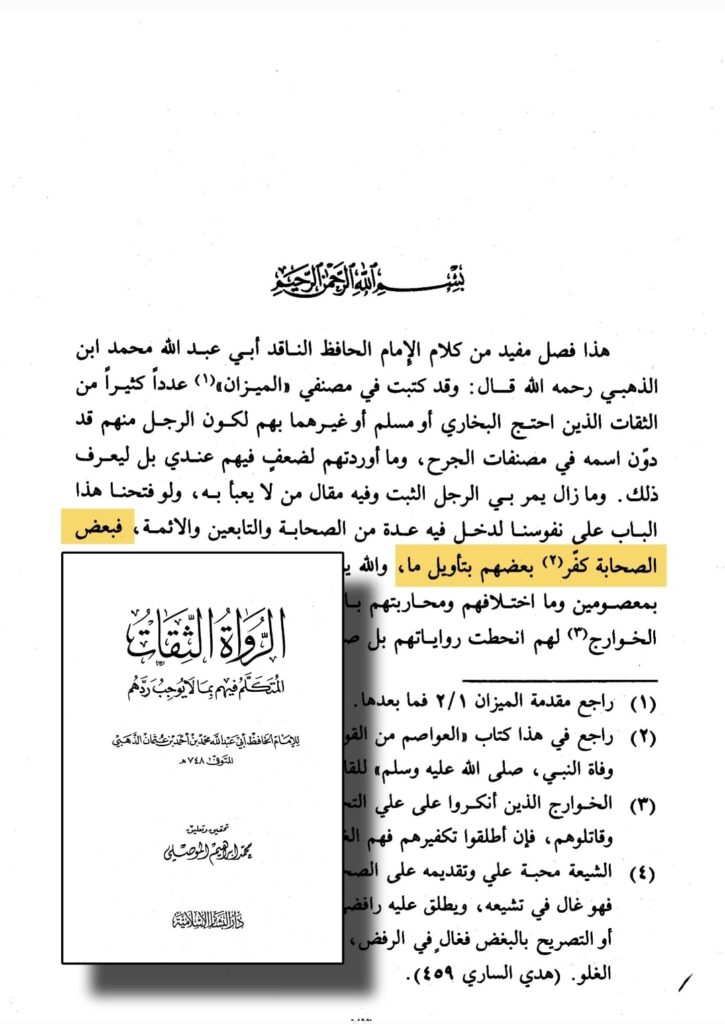
Your own scholars and books record that Sahabah clashed, cursed one another, and in some cases, declared each other disbelievers. Take for example the testimony of one of your most revered scholars in the science of hadith, Al-Dhahabi:
فبعض الصحابة كفر بعضهم بتأويل ما
Some of the Companions declared others among them disbelievers due to certain interpretations.
(Al-Ruwat al-Thiqat al-Mutakallam Fihim Bima La Yujib Raddahum, p. 23)
This isn’t a Shi’i claim. It’s from your own tradition. And there’s more:
1. Umm al-Mu’minin Aisha invoked *la‘nah* upon the Companion Amr ibn al-‘As.
(Al-Mustadrak ‘ala al-Sahihayn, Volume 4, p. 14, Hadith 6744)
2. Muawiya ordered Sa‘d ibn Abi Waqqas to curse Imam Ali ibn Abi Talib.
(Sahih Muslim, p. 1129, Hadith 2404)
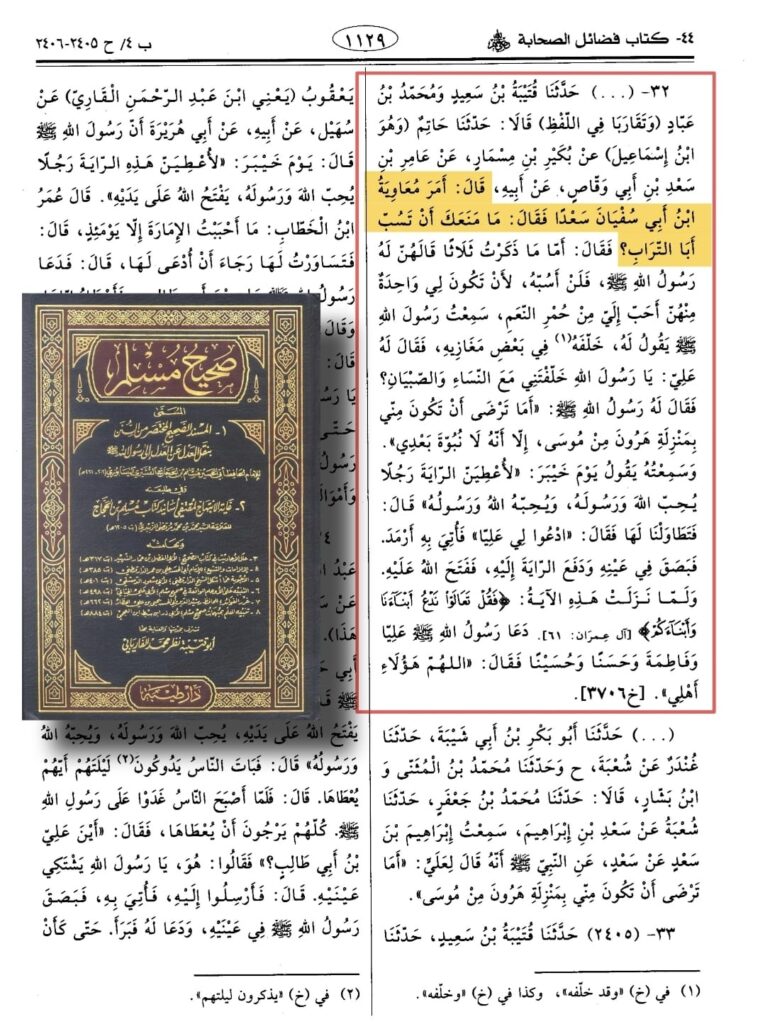
3. Imam Ali (peace be upon him) prayed for destruction against Muawiya, Amr ibn al-‘As, and others.
(Al-Musannaf by Ibn Abi Shaybah, Volume 5, p. 43, Hadith 7133)
Now tell us will you apply your ruling to these individuals too? Will you dare say that Aisha, Sa’d ibn Abi Waqqas, Imam Ali, or Muawiya fell into disbelief?
Or is your fatwa only reserved for the critics of today, while the accusations and curses of the first generation get swept under the rug?
This inconsistency undermines your entire principle. You cannot claim all Sahabah are upright and simultaneously ignore the historical fact that many among them fell into fierce, public conflict complete with accusations, curses, and even war.
Either revise your claim or accept that your principle collapses under its own weight.
We, the seekers of truth, judge all individuals Companions included by the objective standards set forth in the Qur’an and the Sunnah. We do not declare people infallible, and we do not issue blanket takfir based on emotional slogans or sectarian convenience.
Truth is above personalities. And historical honesty requires courage.
Research by: Khayr Talab (may Allah protect him), translated and updated by the Shiapen Team