
The paucity of Hadith from Ḥaḍrat ʿAlī (as) in the Ṣaḥīḥayn and our questions
Dr. Maḥmūd Ṭaḥān notes the total number of aḥādīth in the Ṣaḥīḥayn as follows:
- Ṣaḥīḥ al-Bukhārī: The total number of narrations in Ṣaḥīḥ al-Bukhārī is 7,275, including repeated narrations. When repetitions are excluded, the number is reduced to approximately 4,000.
- Ṣaḥīḥ Muslim: Including repetitions, Ṣaḥīḥ Muslim contains around 12,000 narrations. When repeated narrations are removed, the actual number is about 4,000.
(Source: Uṣūl Ḥadīth by Dr. Al- Dr. Maḥmūd Ṭaḥān – Urdu Sharḥ of Tayseer Muṣṭalaḥ al-Ḥadīth, p. 64 as translated by Muftī Muḥammad Amīr)
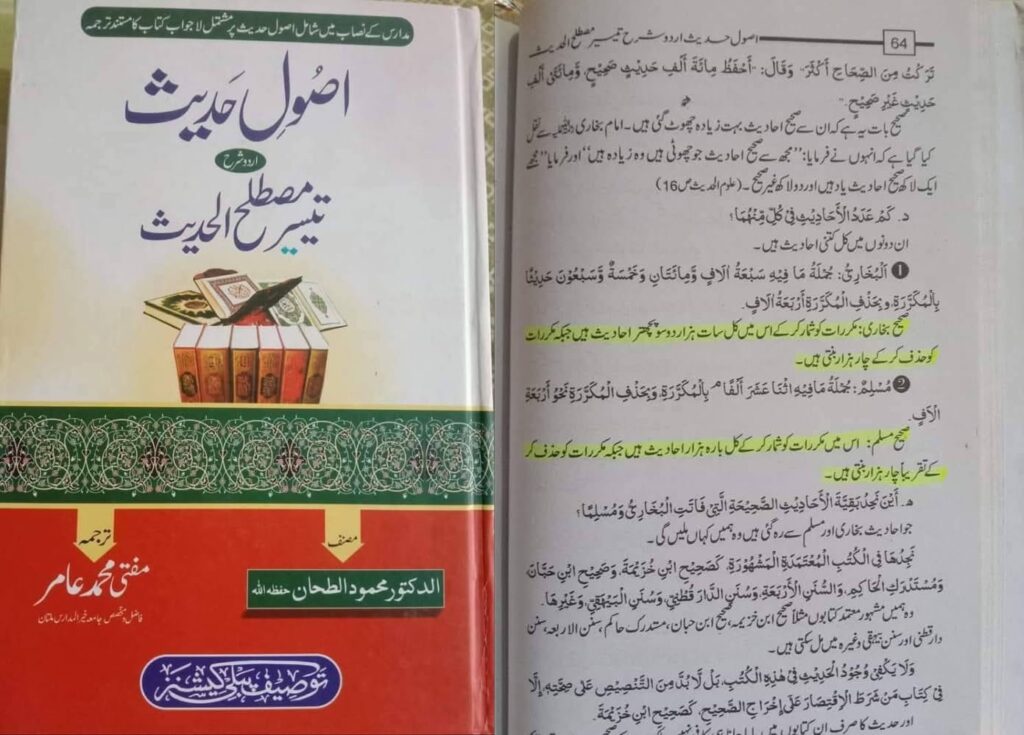
Thus, the combined total of narrations in the Ṣaḥīḥayn stands at 19,275 with repetitions, and approximately 8,000 without.
How many of these narrations are from Ḥaḍrat ʿAlī (ʿa)?
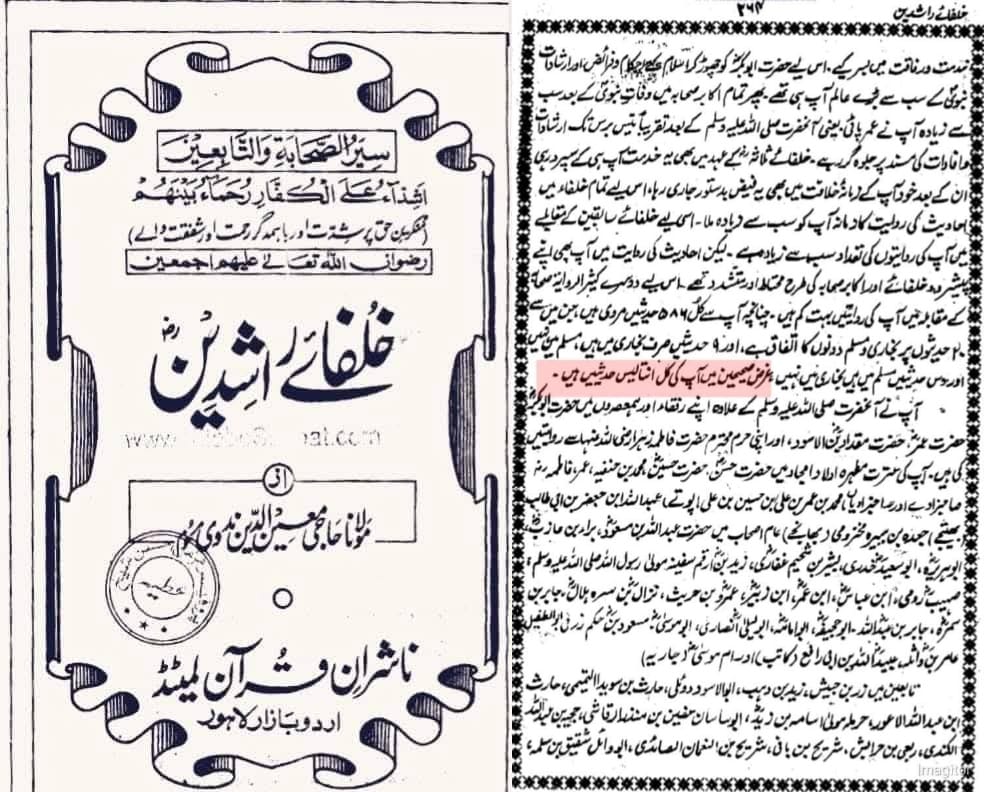
The Sunni scholar Shāh Muʿīn al-Dīn Nadwī writes in Sīrat Khulafāʾ al-Rāshidīn:
“There are a total of thirty-nine (39) ḥadīths from him in the Ṣaḥīḥayn.”
(Sīrat Khulafāʾ al-Rāshidīn, p. 264)
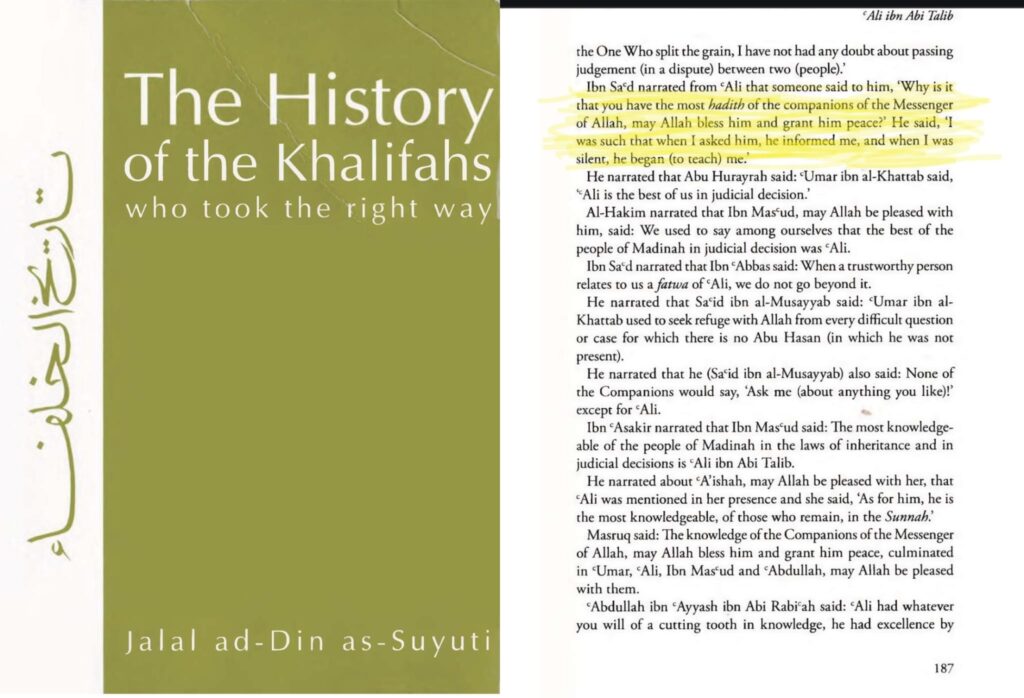
Imam ʿAlī (as) was not a peripheral observer. He was the Prophet’s (ṣ) cousin, son-in-law, lifelong companion, adviser, jurist, and battlefield standard-bearer. He lived in the Prophet’s household and repeatedly stressed his direct instruction from the Messenger. This is deeply problematic when viewed in light of a statement attributed to Imam ʿAlī (as) himself. Al-Suyūṭī records in Tārīkh al-Khulafāʾ:
Ibn Saʿd narrated from ʿAlī that someone asked him, “Why is it that you have the most ḥadīths of the companions of the Messenger of Allah (ṣ)?” He replied, “I was such that when I asked him, he informed me, and when I was silent, he began [to teach] me.”
(Tārīkh al-Khulafāʾ, biography of ʿAlī ibn Abī Ṭālib)
Given this testimony and his lifelong proximity, one would reasonably expect Imam ʿAlī (as) to appear frequently among the transmitters of the Prophet’s teachings. Yet the Ṣaḥīḥayn reduce his recorded voice to a negligible handful.
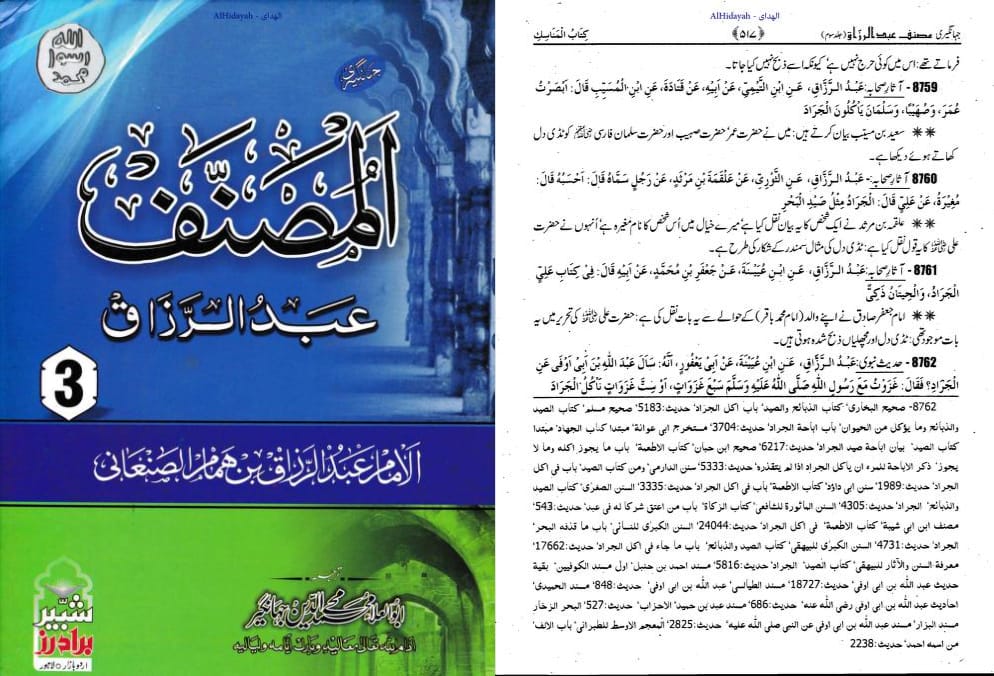
To further the point, we turn to Musannaf ʿAbd al-Razzāq, a source written by Imam ʿAbd al-Razzāq al-Ṣanʿānī—one of the senior teachers of both Imām al-Bukhārī and Imām Muslim. In this work, the following narration is recorded:
عن ابن عيينة عن جعفر بن محمد عن أبيه قال: في كتاب علي الجراد والحيتان ذكي
Jaʿfar al-Ṣādiq narrated from his father, Imam Muḥammad al-Bāqir, who said:
“In the Book of ʿAlī is the ruling that locusts and sea creatures are considered ritually pure (i.e., lawful to eat).”
(Musannaf ʿAbd al-Razzāq, vol. 3, p. 517, Shabbir Brothers)
This reference is critical for several reasons:
- It shows that Imam ʿAlī (as) compiled a book—Kitāb ʿAlī—making him the earliest known author of a legal corpus in Islamic history.
- It proves that the knowledge Imam ʿAlī (as) received from the Prophet (ṣ) was documented and preserved by the Imams from his progeny, particularly Imām al-Bāqir (as) and Imām al-Ṣādiq (as).
So where is the voice of Imam ʿAlī (ʿa) in the Sunni hadith corpus?
How can a man acknowledged even by Sunni scholars as the gateway to the Prophet’s knowledge—Bāb al-ʿIlm—have only 39 narrations in Ṣaḥīḥ al-Bukhārī and Ṣaḥīḥ Muslim combined, while others with far less proximity to the Prophet (ṣ) are afforded hundreds or even thousands?
The question cannot be answered by attributing it to Imam ʿAlī’s silence or lack of memory, he was a statesman, jurist, and battlefield companion of the Prophet (ṣ). Nor can it be justified by questioning the authenticity of his narrations, when we learn that the Imams from the household of Rasulullah (as), had inherited possessed hadith of Rasulullah (s) in Kitāb ʿAlī as a source of law.
The answer, it seems, lies in historical selectivity. Certain political and theological forces post-Prophethood contributed to the marginalisation of the Ahl al-Bayt’s legacy in mainstream Sunni compilations. The deliberate underrepresentation of Ḥaḍrat ʿAlī’s (as) narrations—even while his unmatched proximity and learning are admitted—calls for critical reflection on how hadith were transmitted, who was prioritized, and whose voices were sidelined.
Questions for reflection (for Sunni readers and students of hadith)
- If Imam ʿAlī (as) is widely acknowledged as the Prophet’s closest disciple and “gate of knowledge,” why do Sunni canon-forming works record so few of his narrations?
- If Kitāb ʿAlī was known and cited by early transmitters, why do later canonical collections give it almost no place?
- What criteria, beyond isnād rigor, determined which transmitters were amplified during the canonization process? Were there political, sectarian, or institutional pressures at play?
- To what extent does the current Sunni hadith corpus reflect historical memory accurately, and to what extent does it reflect the priorities of later compilers and patrons?
The scarcity of Imam ʿAlī’s (as) narrations in the Ṣaḥīḥayn is not prima facie evidence of his ignorance or silence. The manuscript and oral record — as preserved in early works like Musannaf ʿAbd al-Razzāq and in the Imams’ transmissions — point to a substantial body of teaching associated with ʿAlī. That this body is scarcely represented in the two most-venerated Sunni collections raises serious questions about selection, exclusion, and the historical forces that shaped the Sunni hadith tradition. Reassessing those forces is essential for a fuller and fairer accounting of the Prophet’s legacy.